Growing Berries
The nutrition for various berry plants is very similar with adjustments made for timing applications. Some are slightly more demanding than others and other berry plants have special requirements which this guide highlights.
The guide breaks down the fruits into the four main crops however if other berries are grown use the type of plant to help you with its nutrition.
Strawberries
There are a wide variety of strawberry plants and these are broken down into two types:
60 Day type
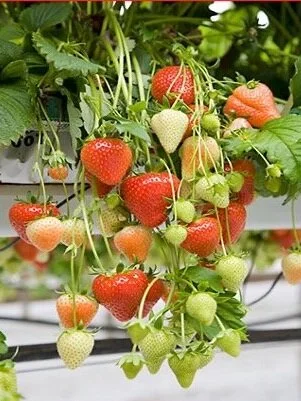
60 Day type
Within the 60 day type plants you also have early, mid-season and late- cropping varieties. The main difference in the two types is that 60 day will have one flowering and fruiting period within 60 days and then the crop finishes for the year. Best current varieties are ‘Elsanta’, ‘Sonata’ and ‘Malling Centenary’.
Everbearer type
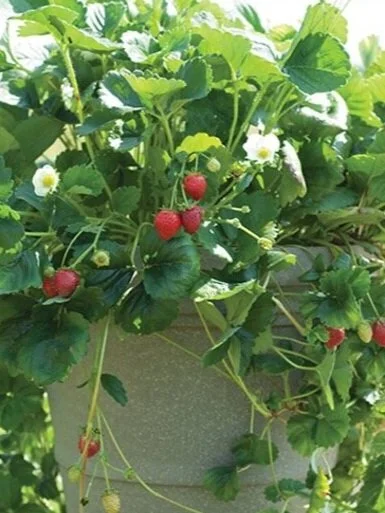
Everbearer type
An everbearer type strawberry will continue to flower and fruit throughout the year, with both fruits and flowers on the plant at the same time. In commercial cropping, growers use both types to provide continuity of fruit as both will produce similar levels of fruit over a season. The best current varieties of everbearer type strawberry are ‘Everest’, ‘Buddy’ and ‘Albion’.
Both types of strawberry can be purchased as either: bare-rooted plants lifted from soil beds or grown in containers.
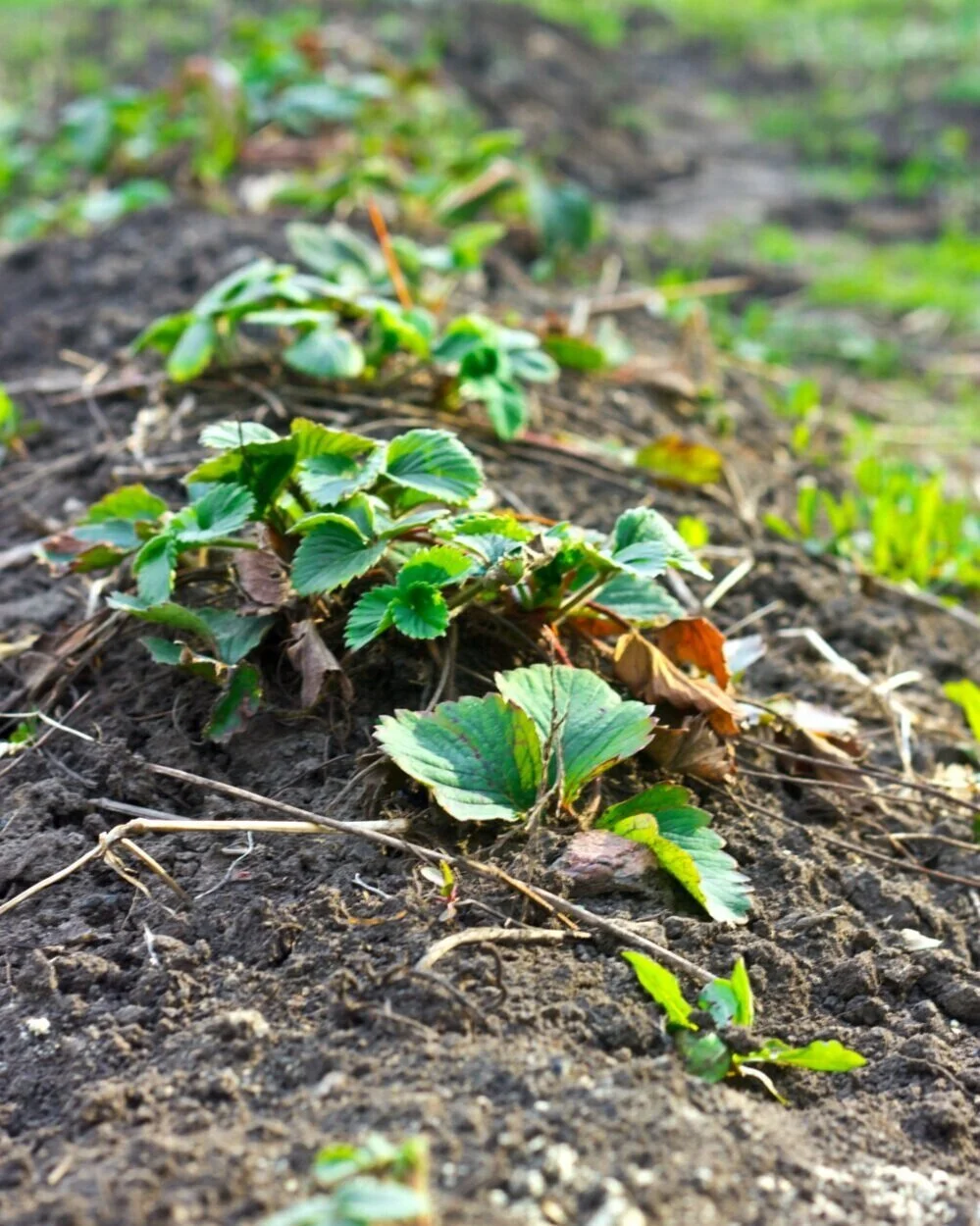
Best soil for Strawberries
Strawberries can be grown in a wide range of soils, from light sands to heavy clay, but they prefer rich fertile soil that is well-drained and rich in organic matter. They love soils with plant compost added which gives them steady nutrition. The soil needs to be dug over, cleared of weeds and mounded into beds or in raised beds to avoid water-logging. Strawberries grow like grasses in that the growing point is at the bottom of the plant and it sends up leaves and flowers from a base ‘crown’ so drainage is very important to avoid plant rotting.
When to plant Strawberries
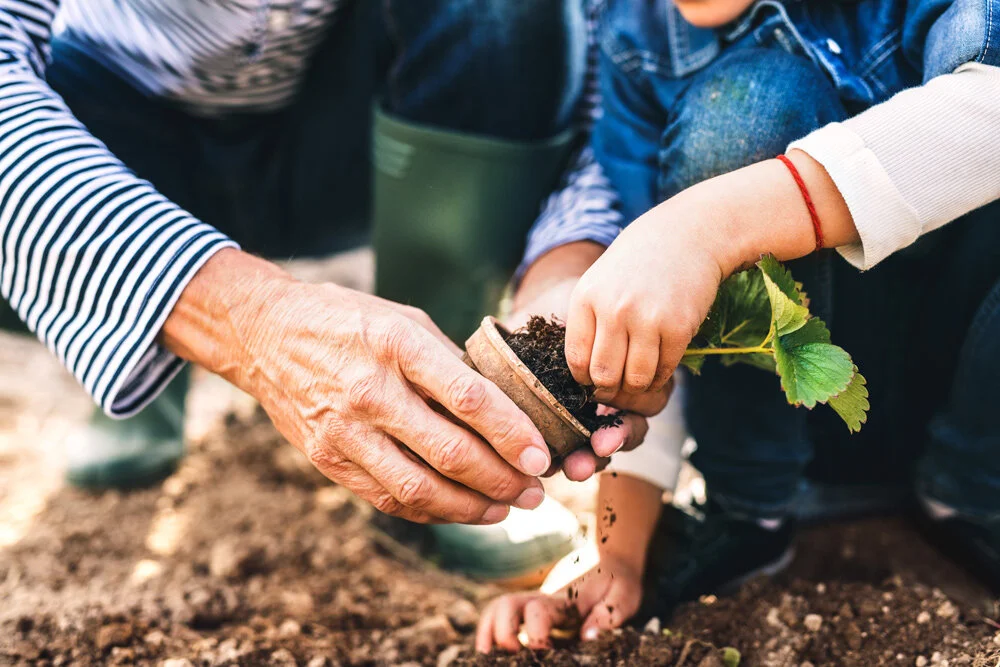
Strawberry plants are ideally planted outdoors from late June until September. This allows them to overwinter before fruiting more heavily the next season. Cold is very important to strawberries as they need lots of chill units to produce strong fruit. Bare rooted plants bought are generally cold stored and may be planted in the spring to fruit in late June, however fruiting will be light and another winter will be required to build a bigger crown which will produce lots of fruit the year after.
Early strawberry varieties can be placed under cloches or polythene covers in late March enabling them to produce fruit two to three weeks earlier than normal.
Top Tip
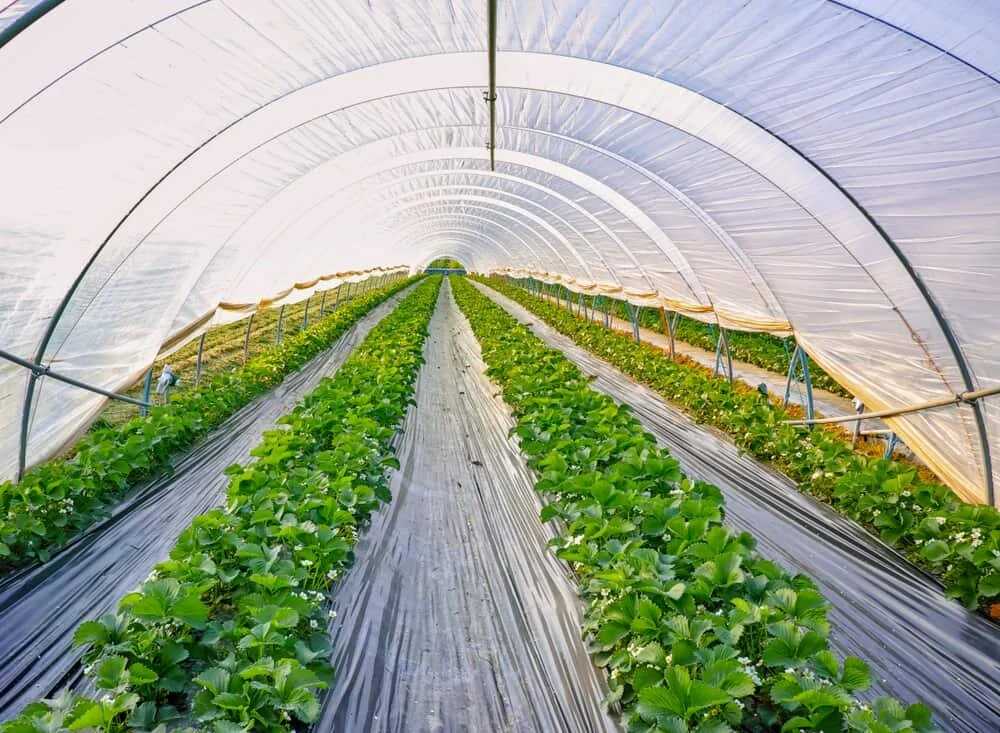
Commercial growers grow under plastic tunnels for two reasons. The first is to provide strawberries earlier or later in the year to keep supermarkets and farm shops topped up and the second is to provide a protected environment which both keeps the strawberries leaves dry so they are less prone to disease and also they can use beneficial insects to keep pests away.
Strawberries Growing Tips
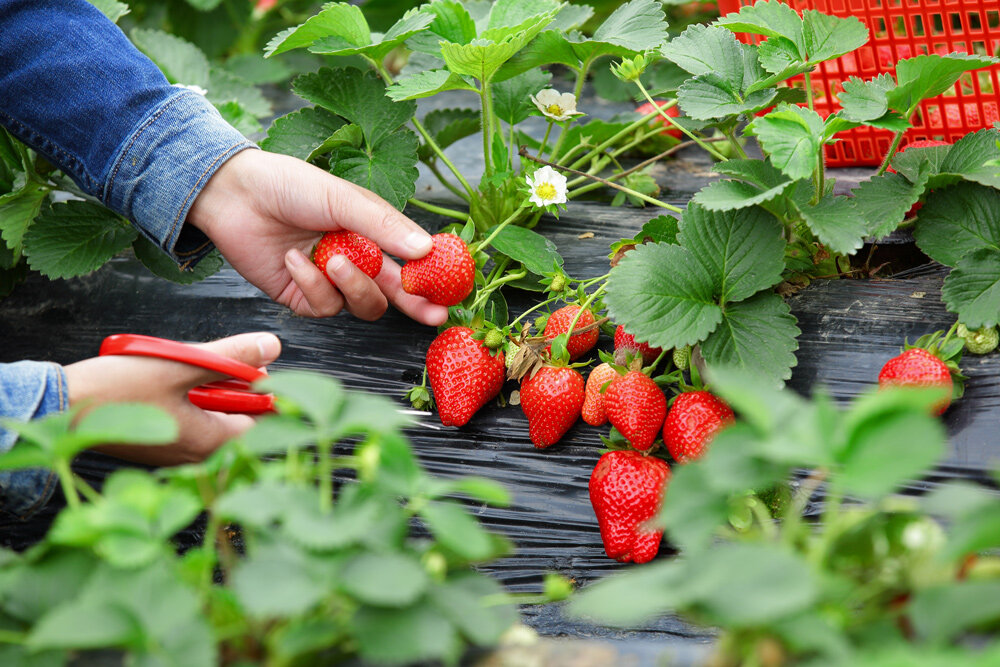
Strawberries prefer to be planted in full sun, out of the wind.
Give the strawberry plants plenty of room to grow, ideally 46–60cm (18 –24”) apart and in rows that are 75cm (30”) apart. This allows you to place straw between the rows which will protect strawberry roots from late frosts; this also acts as a good weed suppressant and will provide a nice bed for fruit to lie on instead of soil which can carry spores that will cause fruit rot.
Plant the strawberries where the base of the crown is at soil level.
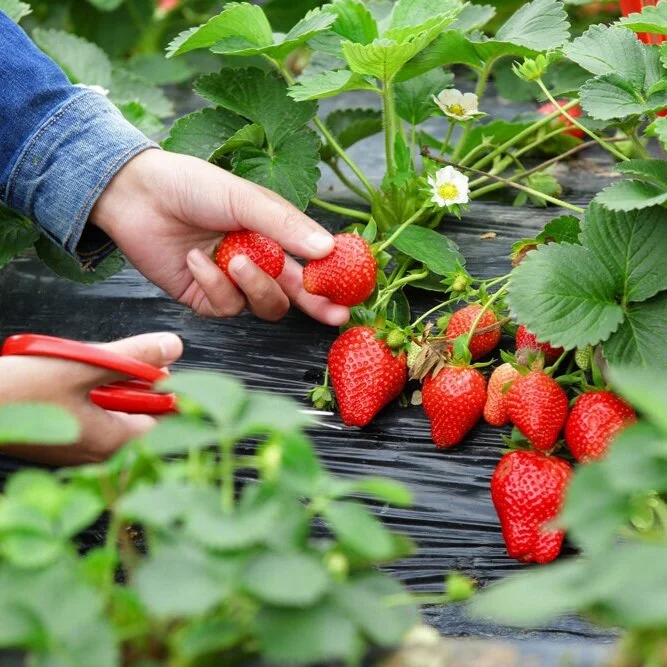
Pick ripe strawberries straight away. Leaving fruit on plants can encourage fruit rots such as botrytis.
Cover the plants with netting to prevent birds and squirrels from eating the fruit.
Growing Strawberries in containers
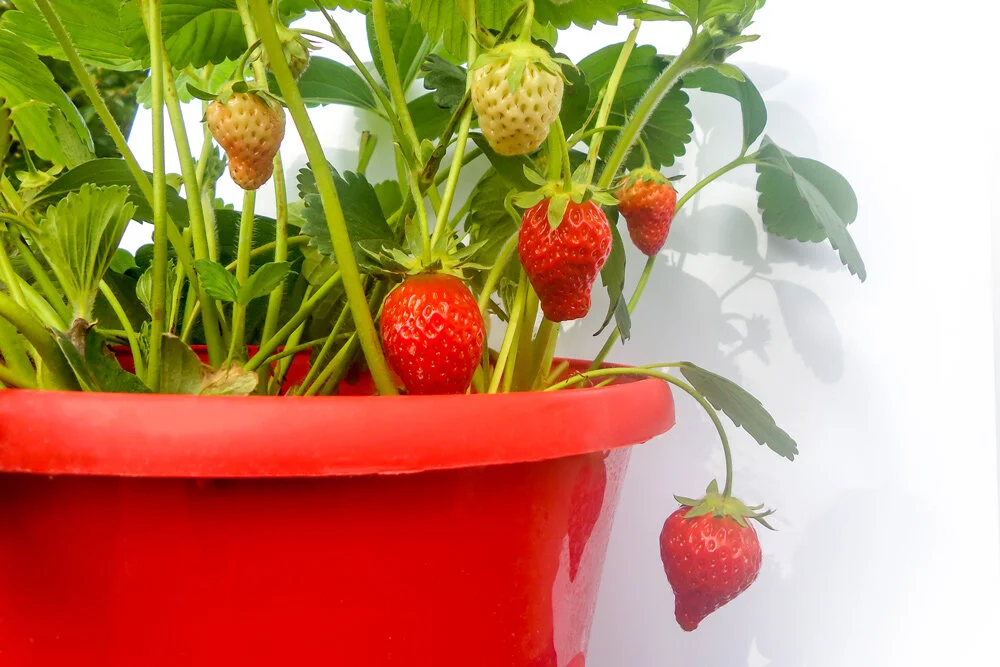
Strawberries grow very well in containers. These should be filled with quality potting soil or compost. The strawberry plants can be planted much closer together and angle so they hang over the side of the container for easier picking.
Make the pot or container is large enough to allow the plants to grow in the same container for three years and ensure that they receive plenty of water and nutrients.
How to harvest Strawberries
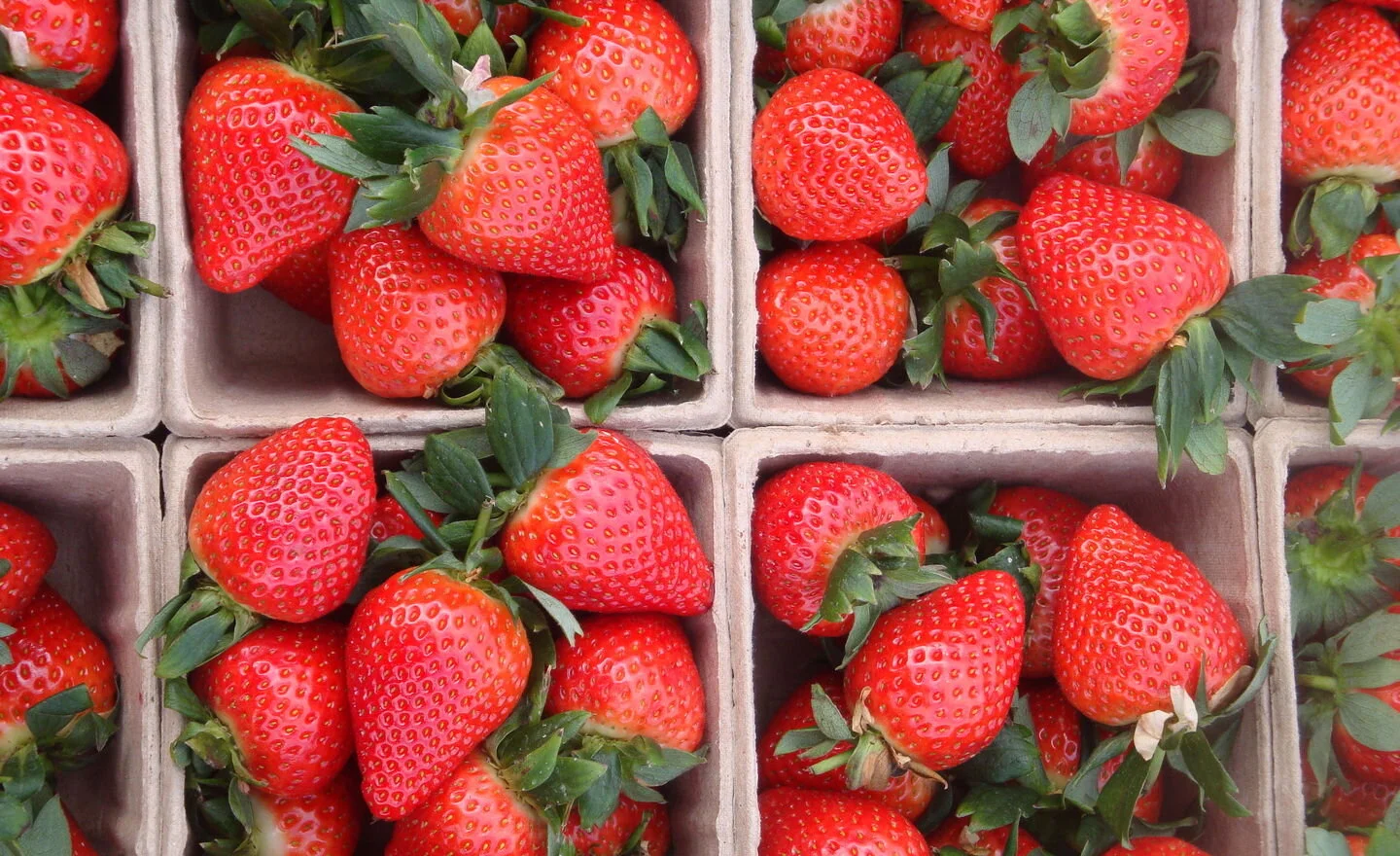
A strawberry is not a true fruit like an apple where the seeds are inside. It is actually a fused swollen flower which is why the seed is on the outside so it is always best to pick it when almost bright red as this is when the sugars in the fruit will be highest.
The fruit redness is different for individual varieties so it’s best to test fruit for sweetness before harvesting – which is actually the best part of growing strawberries!
Pick any fruit as soon as it's ripe to prevent it rotting on the plant.
Ideally pick first thing in the morning, when fruit is at its juiciest and firmest.
Check the plants during the ripening period every couple of days.
It’s best to harvest the fruit in dry weather and ideally leave the green stalk (calyx) on the fruit as this helps with shelf life.
Top Tip
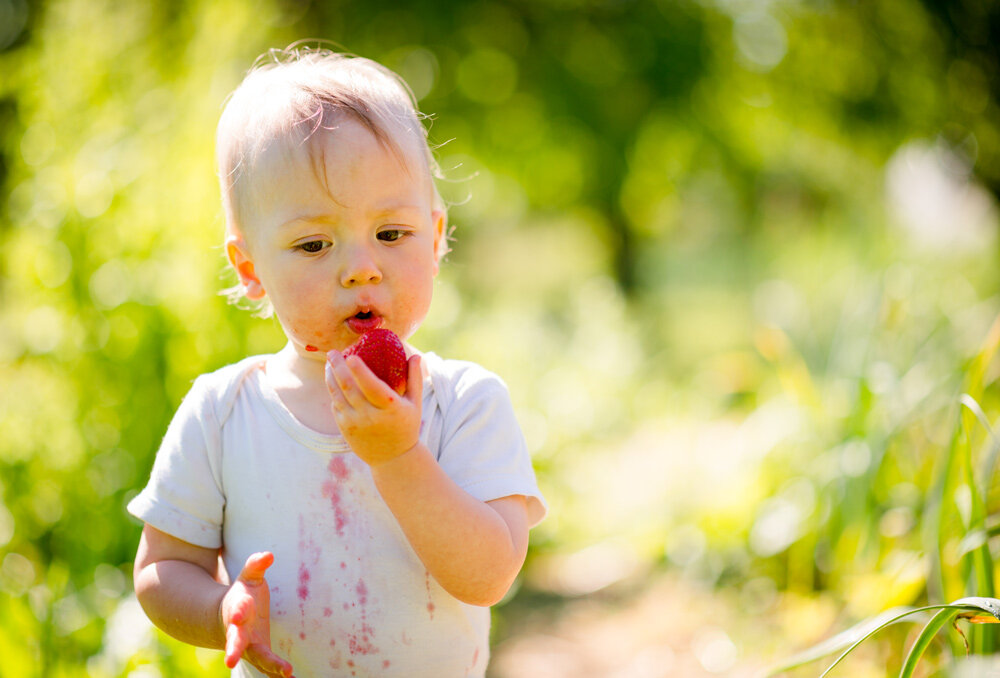
When you have picked your strawberries or even bought some from a shop don’t put them in the refrigerator unless you wish to keep them for much longer, as this neutralises the sweetness. How many times have you been to a PYO farm and thought how tasty the fruit was, or how many times have you sprinkled sugar over your strawberries because they are not sweet enough? It is the refrigerator that does this. Remember the fruit at a PYO is at a temperature of 15-25oC so all the sugars are expressed perfectly. When you want to eat your strawberries bring them out of the fridge at least 2-3 hours before eating and you will not be disappointed, plus, you won’t need that extra sugar.
Strawberries aftercare
Once all the fruit has been picked, remove the netting.
Make sure you continue to feed them as they will push the nutrients into the crown to give you wonderful fruit next year.
Remove old tired leaves, leaving the crown and new leaves untouched. This allows sunlight into the centre of the plant, ensuring a better crop next year.
Remove runners unless you wish to use them to increase the number of plants. By cutting off old leaves and runners the health of the plants will be improved as it removes potential sources of disease.
Keep well-watered so the plants can take up nutrients in higher quantities.
Strawberries Propagation
Making more strawberry plants is really straight forward. The plants produce runners for fun and in beds these can just be pegged down, usually in June or July, while still attached to the mother plant. They will root into the soil and develop into a separate plant. These can be lifted in August time, trimmed away from the mother plant and planted elsewhere. Alternatively, the runner can be pegged into pots where they will root and can be trimmed away in the same manner.
Its best taking runners in year 3 unless you want to be overrun with strawberries.
Feeding Strawberries
Feeding strawberries is similar to tomatoes in that they can use quite a bit of feed when growing. They also need to be fed all season long to ensure fabulous berries from year to year. A higher potassium ratio feed gives the plant a nice balance of leaf to flower and won’t give you massive triffids with large cabbage leaves and no fruit. Calcium is essential for strawberries to produce lots of strong fruit which will have plenty of shelf life, once harvested. They also require plenty of iron and manganese so regular supplementary feeding is advised especially in pots and raised beds.
Gro-Expert advise feeding at every watering during the growing season and this can be reduced to once per week after fruiting has finished.

Raspberries (cane & bush fruits)
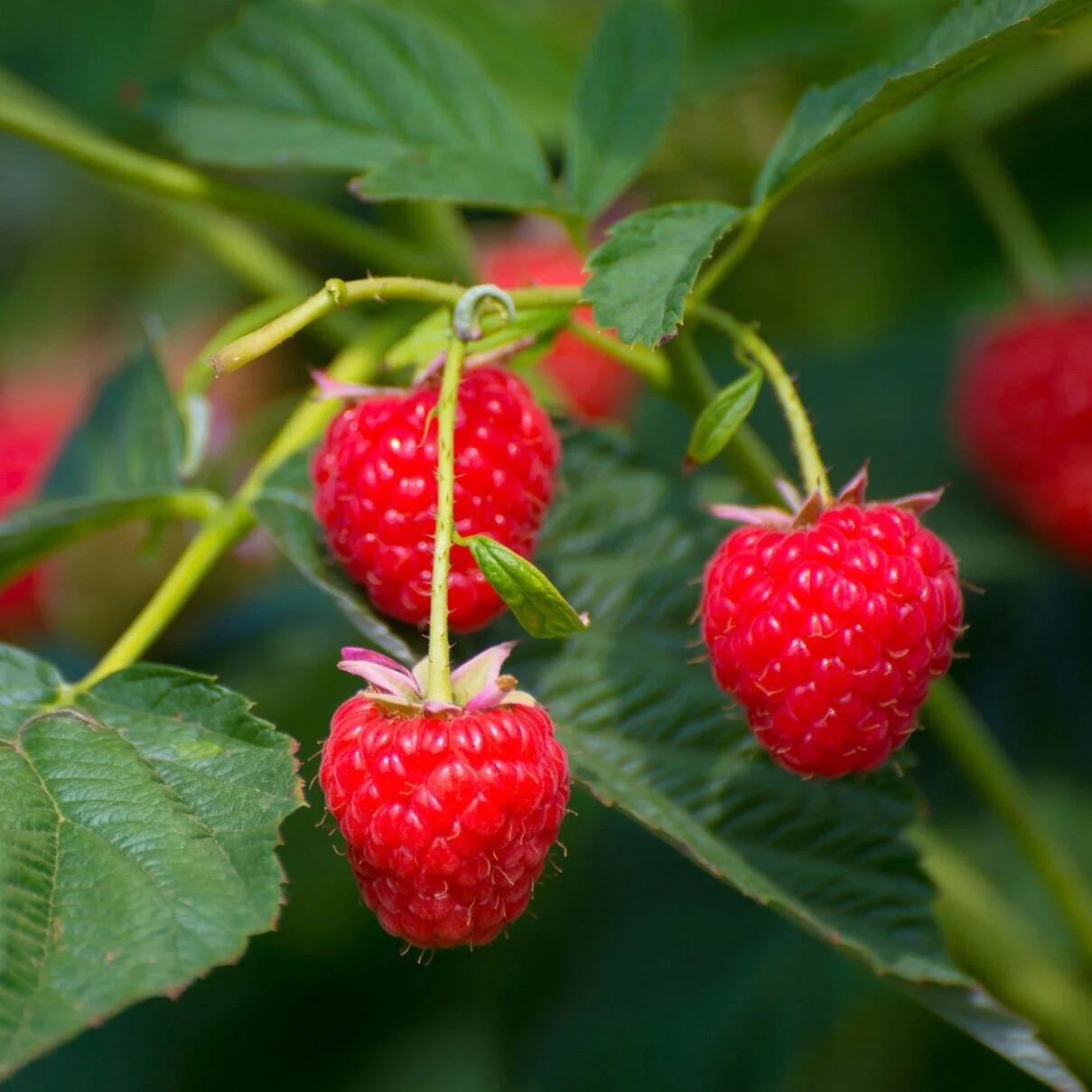
The common raspberry cane is a great garden fruit that is easy to grow. There are many different varieties available and these can bear fruit at different times.
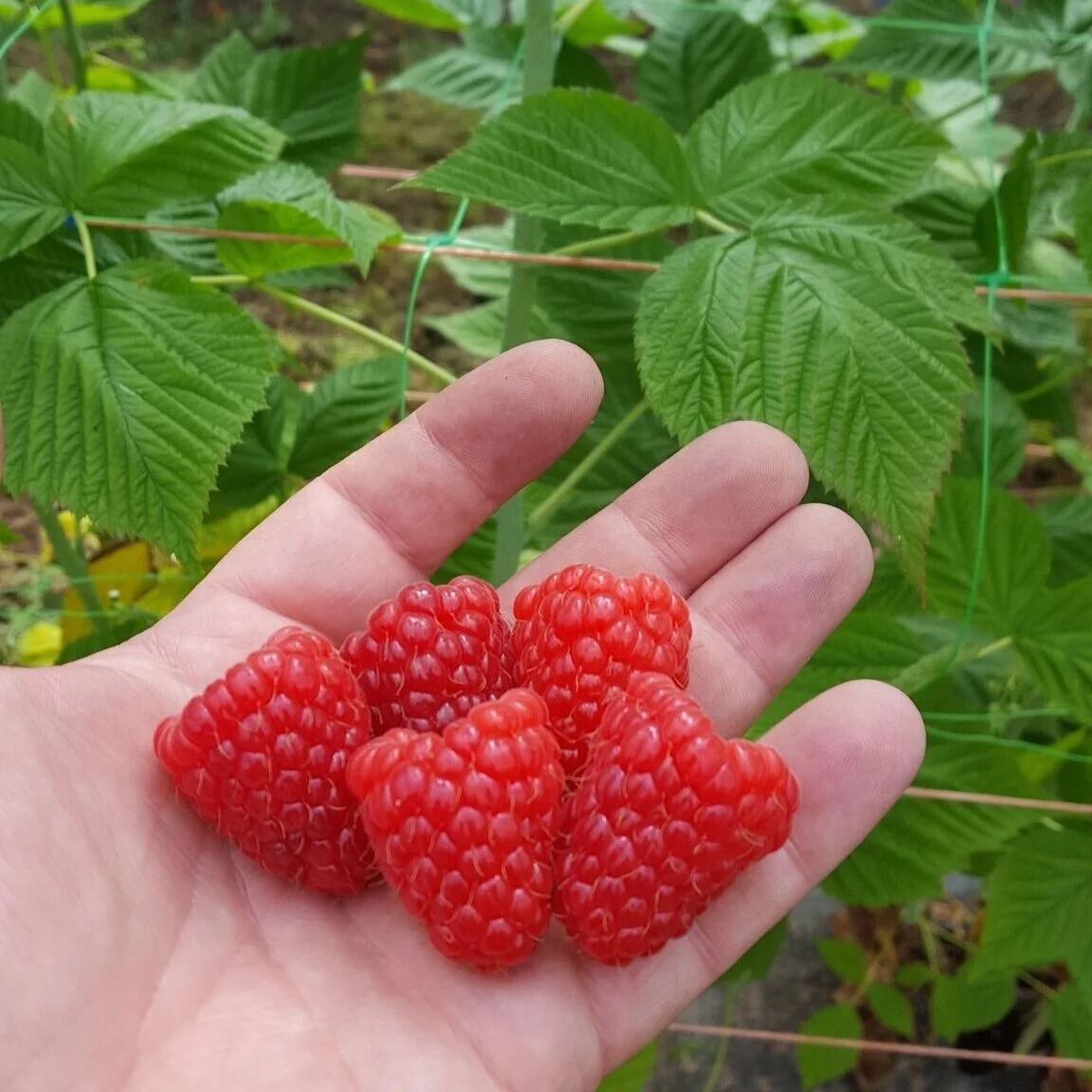
Most raspberries fruit on the wood produced the previous summer. These are "Summer Fruiting Raspberries" categorised as Early, Mid and Late season. Autumn Fruiting Raspberries are shorter, bushier, need much less support, fruit on the current season's growth and will fruit again next year if left to do so.
The raspberry has two canes, the first year cane is called the primocane (primary cane) and in the second year it will produce laterals each with flowers and this is known as the floracane (flower cane).
Which are the best varieties of Raspberry?
Over the years, British breeders have produced some of the greatest raspberry varieties you can buy. So the choice is wide, every year. Here are a few of the best:
Early: ‘Glen Moy’ - Bred in 1986 and still one of the earliest fruiting raspberry plants there is. ‘Malling Jewel’ is a little later but still produces a very good crop.
Mid-Season: ‘Glen Ample’ - Mid Season. Huge crops, great flavour, spine-free. ‘Tulameen’ - Mid/late. Sweet and large fruit. Both of these varieties are still favourites of commercial growers and make up most of the raspberries grown in the UK.
Late-Season: ‘Glen Magna’ - Heavy cropper, ‘Octavia’ - Large fruit. Good for freezing.
Autumn: ‘Autumn Bliss’, ‘Joan J’ and ‘Polka’ all have fanatical proponents. They are delicious and none suffer from raspberry beetle.
Best Soil for Raspberries
Raspberries prefer fertile, slightly acidic soils, which are well-drained and weed free. The planting site should be well dug and cleared of weeds. Raspberries hate extremes, so dry and wet soils are not good unless improved with masses of well-rotted organic material (which raspberries love irrespective of soil type). It is best to make a raised bed to keep roots well drained. Also mulch it with bark to keep the bed moist.
Top Tip
Berries in raised beds need even moisture and good nutrition levels to produce top quality berries. Commercial growers do this with the use of surfactants. In the Gro-Expert pack for berries is a product called Aqualatus which is an organic moisture retention aid. It locks moisture into the soil in an equal balance with air so raised beds stay moist, are evenly moist and have a perfect balance of nutrients across the bed.
Planting Raspberries
Raspberries can be planted any time between November and March, providing the soil is not frozen or waterlogged.
They grow best in a sunny sheltered position although many varieties will still grow in a part shaded area.
Wind is not really a problem for raspberries, although stakes used for the straining wires of summer fruiting raspberries need must be strong enough for the conditions.
How to plant Raspberries
Improve the soil with loads of rotted manure/garden compost. Summer-fruiting varieties need permanent support with upright posts 1.8m (6ft) high when in the ground. Strain wires between posts 60cm (2ft) apart.
Plant your canes 40-50 cm apart and leave 1.5-2m (4-6ft) between rows. Autumn-fruiting raspberry canes should be planted about 60cm apart in each direction (and do not need stakes and wire). In both cases, plant canes about 7-8cm (3in) deep, firming them in very gently and cut the canes to 25 cm tall to promote more fruiting shoots. Water in well.
Raspberries supports
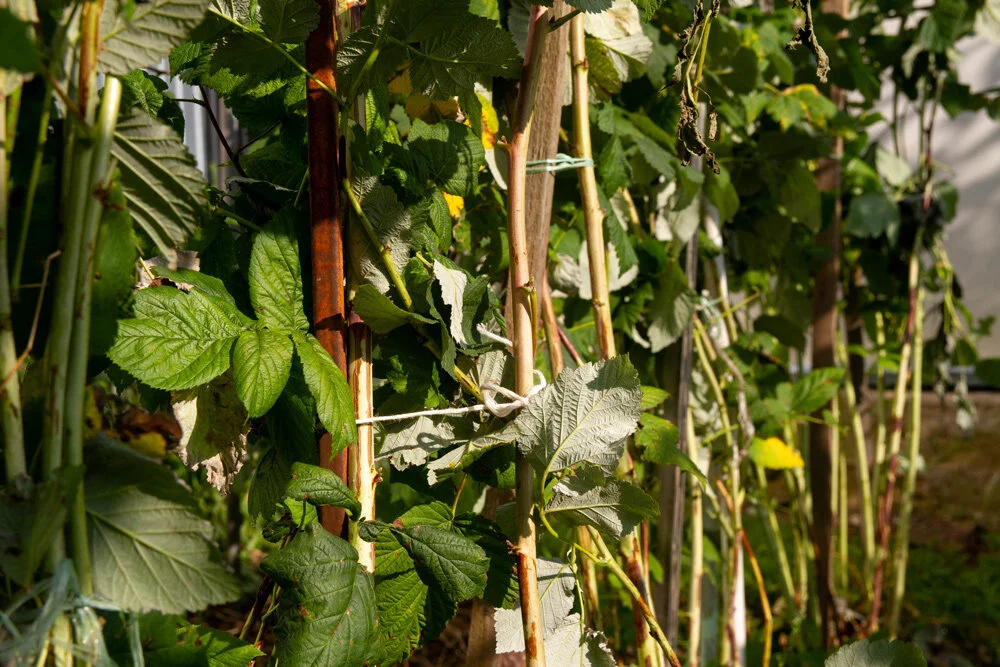
Raspberries are best grown in rows using supports and wires. A single fence system is ideal for summer-fruiting raspberries in a small garden as they can be 6-8’ tall once growing gets underway.
Hammer 2.5m (8ft) long and 75mm (3in) diameter posts into the ground to a depth of 75cm (30in) at 5m (15ft) intervals.
Stretch 12 gauge (3.5mm) galvanized wire between the posts at 60cm (2ft) vertical intervals.
Plant the summer-fruiting raspberries and tie in the canes along one side of the wires.
Separate the old fruiting canes and young new canes for fruiting next year to different sides of the fence.
In a large garden or allotment, hammer two 2.4m (8ft) tree stakes into the ground 60cm (24in) deep, about 3m (10ft) apart.
A single fence system with parallel wires is well suited to autumn-fruiting raspberries, and increases yield in a small space for summer-fruiting raspberries. This involves attaching two short horizontal lengths of timber to each post, one at the top, and one 60cm (2ft) below. Again using 12 gauge (3.5mm) galvanized wire stretch in parallel lines along the ends of the horizontal lengths of timber to create two parallel lengths of wire along the fence.
For a very small garden a single post system can be used:
Drive a 2.5m (8ft) long and 75mm (3in) diameter post into the ground to a depth of 75cm (30in).
Plant two or three plants around the base and tie in the canes with garden twine.
Raspberries nutrition
Raspberries require a lot of nutrients and water as they have shallow roots plus whilst they are growing, flowering and fruiting they are also producing next year’s canes (spawn). They need to be fed all season long to ensure fabulous berries from year to year. A higher potassium ratio feed gives the plant a nice balance of leaf to flower and won’t give you long extension growth which will not support fruit. Calcium is essential for raspberries to produce lots of strong fruit which will have plenty of shelf life, once harvested. They also require plenty of iron and manganese so regular supplementary feeding with Gro-Experts Berries feed mix is advised especially in pots and raised beds.
Gro-Expert advises feeding at every watering during the growing season and this can be reduced to once per week after fruiting has finished unless you wish to stimulate greater cane growth for the next season.
Growing tips for Raspberries
Keep raspberry plants damp, especially during dry weather.
Always cover the plants with netting to prevent birds and squirrels from eating the fruit.
How to harvest Raspberries
The fruit is ready for picking when it has turned red and the drooplets (smaller portions of the whole berry) swell up.
Pick any fruit as soon as it's ripe as it becomes an infection point for botrytis if left on the plant.
The berries detach easily from their central stem, leaving a small core behind. A small twist will help to roll the berries away from the plant.
Check the plants every two days during the ripening period as they can ripen very fast in the height of summer.
Well-fed raspberries supported by calcium will be perfect for a week if refrigerated. Raspberries not refrigerated need to be eaten more quickly than other berries as they do not last as long. Raspberries are very good for freezing so this is a great option if you have berry overload!
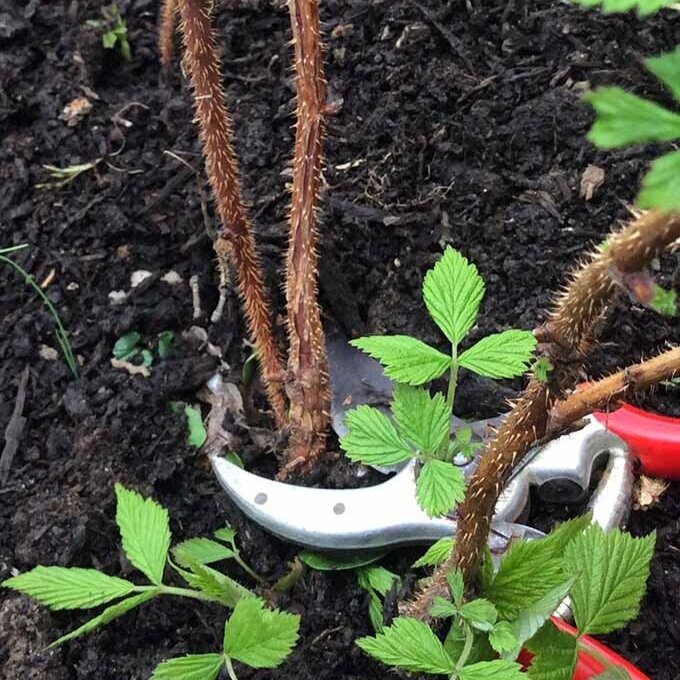
Pruning Raspberries
Regular annual pruning will result in healthier plants and improved quality crops.
Summer fruiting floracane should be pruned right back to the ground during the autumn/winter once they have finished fruiting.
Keep the strongest new canes from each plant to fruit next year, and remove the rest. Tie into supports as soon as you can keep an equal distance between canes.
All autumn fruiting varieties which have produced second year fruits should be pruned in mid-winter and also cut back to the ground.
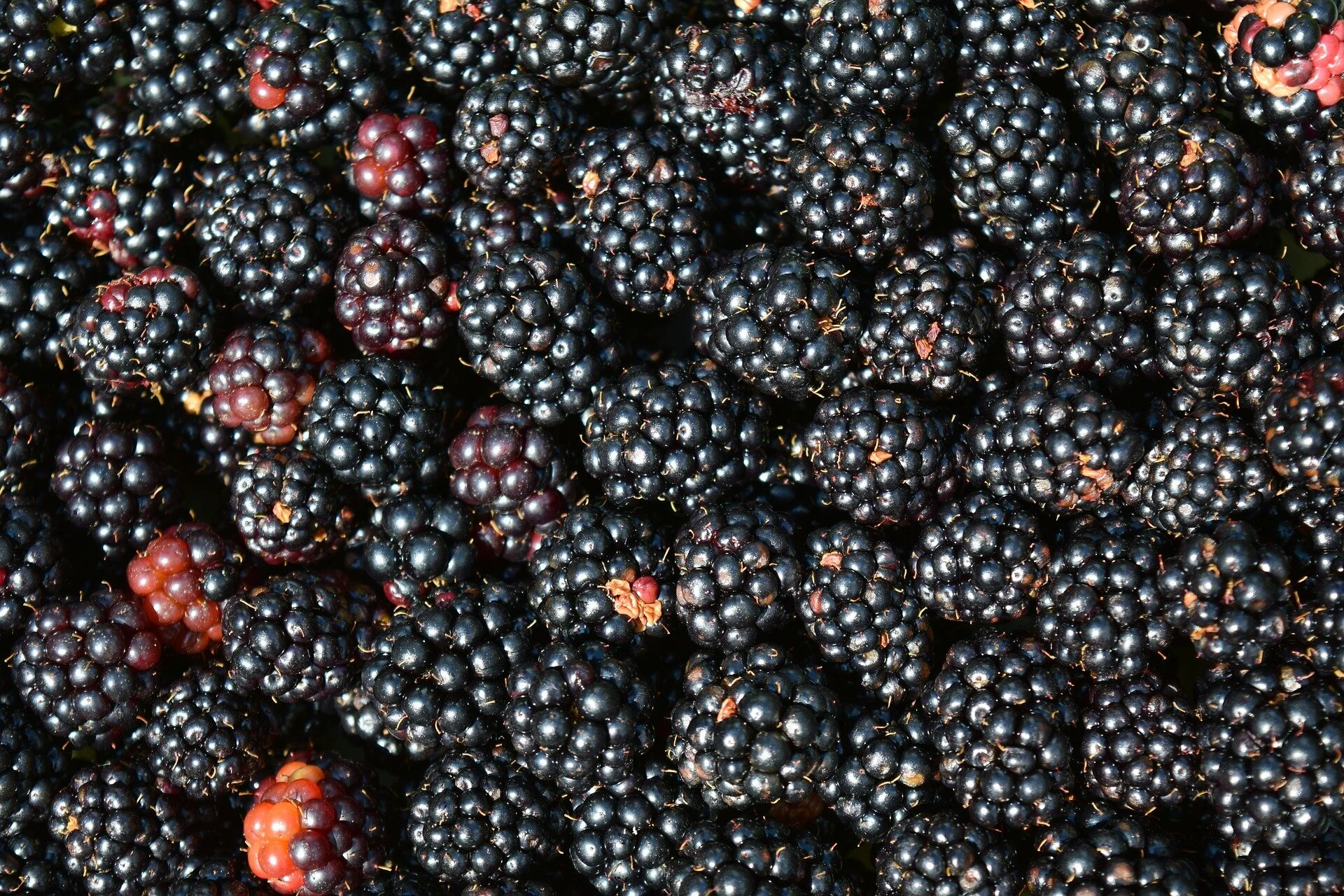
Blackberries

Many fruit growers say blackberries are easy to grow and produce lots of delicious and tasty fruit with very little work and care, however with blackberries, management of the briar is key to success.
There are many varieties suitable for home growing which produce good yields. These are usually much bigger and sweeter compared to the ones found growing in the wild and generally have less spines or even no spines.
Blackberries are very happy in the ground or in large pots, however please ensure the pot is large enough to keep the plants for a long time as blackberry bushes have a long lifespan of up to 15 years.
Best soil for Blackberries
Blackberries can grow in almost all soil conditions except very chalky ground which is not suitable. They require a free draining soil which can still retain some moisture but they should not be planted in ground which becomes water-logged. Like raspberries, slightly acidic soils, which are well-drained and weed free, are best.
The planting site should be well dug and cleared of weeds. Improve heavy soils with masses of well-rotted organic material. It is best to make a raised bed to keep roots well drained. Also mulch with bark or other organic material to help keep the bed moist.
Planting Blackberries
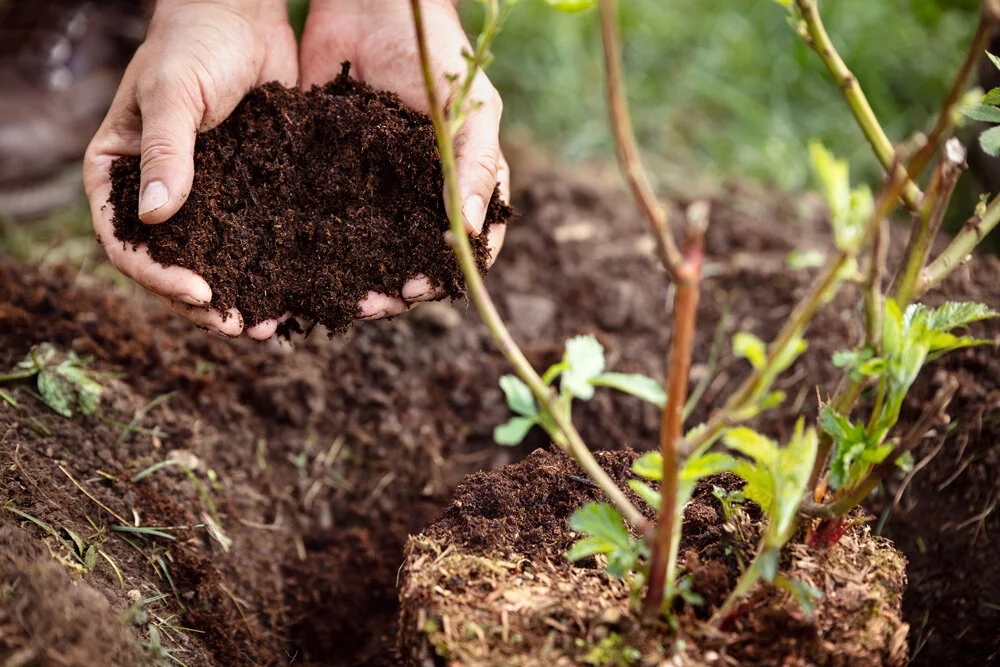
Blackberries will grow in shady areas as well as full sun. Unlike other berries they can be grown in areas prone to frost as they flower later in spring from May onwards.
Blackberry crowns can be planted at any time of year although they will establish themselves best if planted between mid-autumn and early winter. During this period the ground will still have warmth and the rain at this time of year will be sufficient to allow you to plant them and forget about them. If planting in winter, do not plant them when the ground is frozen.
Blackberries are all self-fertile and are vigorous plants, so they need to be given plenty of room.
A single plant of the vigorous varieties can have a spread of 4m or more when fully grown therefore allow around 3m (10ft) between plants. They also tip layer very easily (stems on the ground grow roots) so ensure you keep stems wired in at least 12” above the ground.
When planting blackberry plants (potted or bare rooted) it is important that the crown of the plant should be level with the soil surface. The plant may rot if you plant too deep or if the crown is planted above soil level the bush may fail to establish. The crown of a blackberry bush is the point at which the roots and stems meet. They should be planted in a hole wider and slightly deeper than the spread of the roots on bare-rooted plants or the container they came in.
Blackberry supports
Blackberries require a good support system for the stems. Use sturdy 7.5cm (3in) 2.4m (8ft) high posts and stretch heavy-gauge wires horizontally between the posts at around 75cm (30in), 1.2m (4ft) and 1.5m (5ft) above ground level. Tie the stems to the wires as they grow with soft twine.
Alternatively, they can be trained along wires attached to a fence or even a shed. A simple method is a single way rope system. The new, current year’s stems are trained out and tied in on one side of the plant, while the stems produced the previous year, and which will carry the fruit, trained out on the other side.
Growing Tips
Growing management of blackberries is generally very simple apart from pruning.
Add mulch annually to a depth of 5cm / 2in as this will help retain essential moisture and keep most weeds away.
Regularly remove weeds around the plant so that they do not overgrow and become difficult to take out.
Remove any stems that spring up away from the centre of the plant as this reduces crowding of stems leading to poor fruits.
Blackberry Nutrition
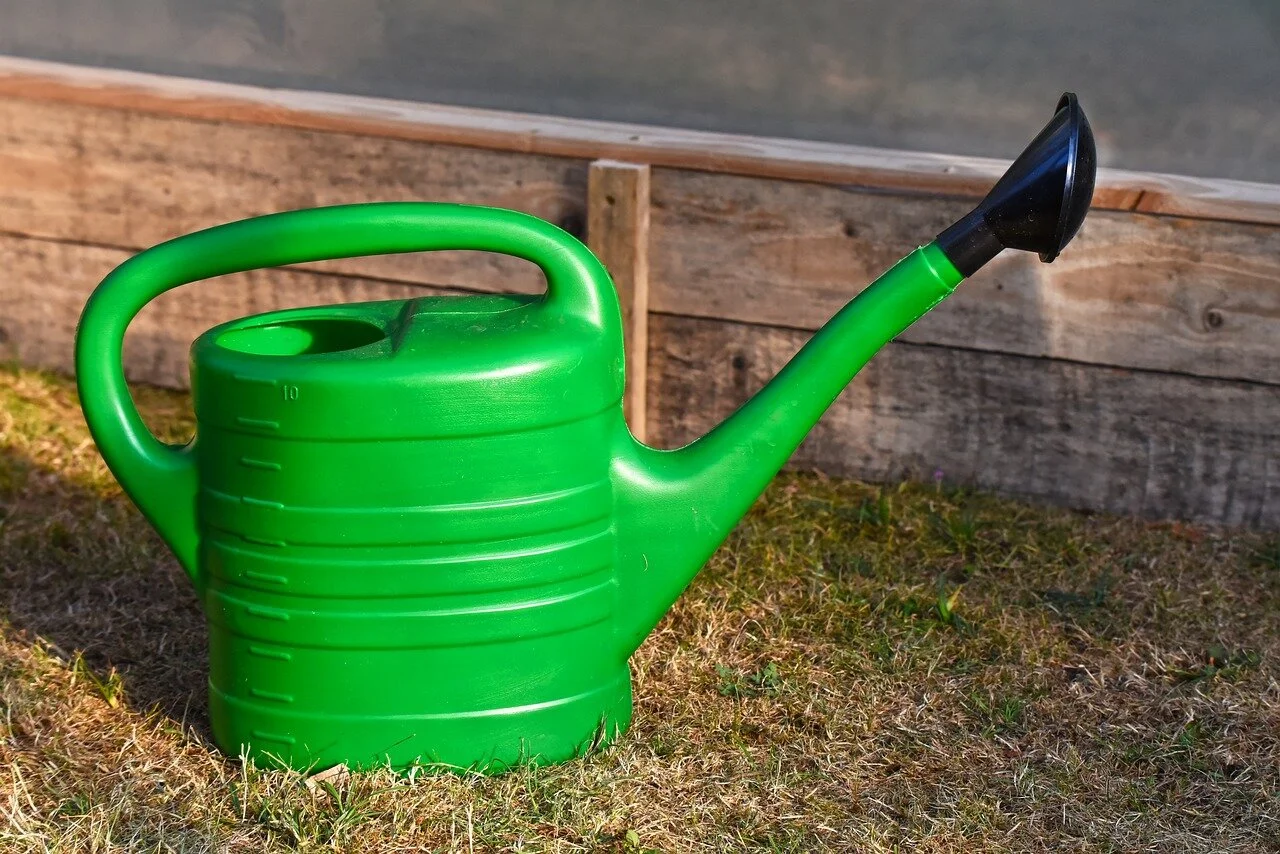
Blackberries are quite demanding of nutrients and water as they are a vigorous plant, however keep applications of nitrogen to a minimum so as not to be overrun with growth. They need to be fed all season to ensure fabulous berries for a long period, as fruit size will drop off if feeding is not maintained. A higher potassium ratio feed gives the plant a nice balance of leaf to flower and won’t give you long extension growth which has no fruit.
Calcium is essential for blackberries to produce lots of strong fruit which will have plenty of shelf life, once harvested. They also require plenty of trace elements so regular supplementary feeding with Gro-Experts Berries feed mix is advised especially in pots and raised beds. Gro-Expert advises feeding weekly during the growing season and this can be reduced once fruiting has finished.
How to harvest Blackberries
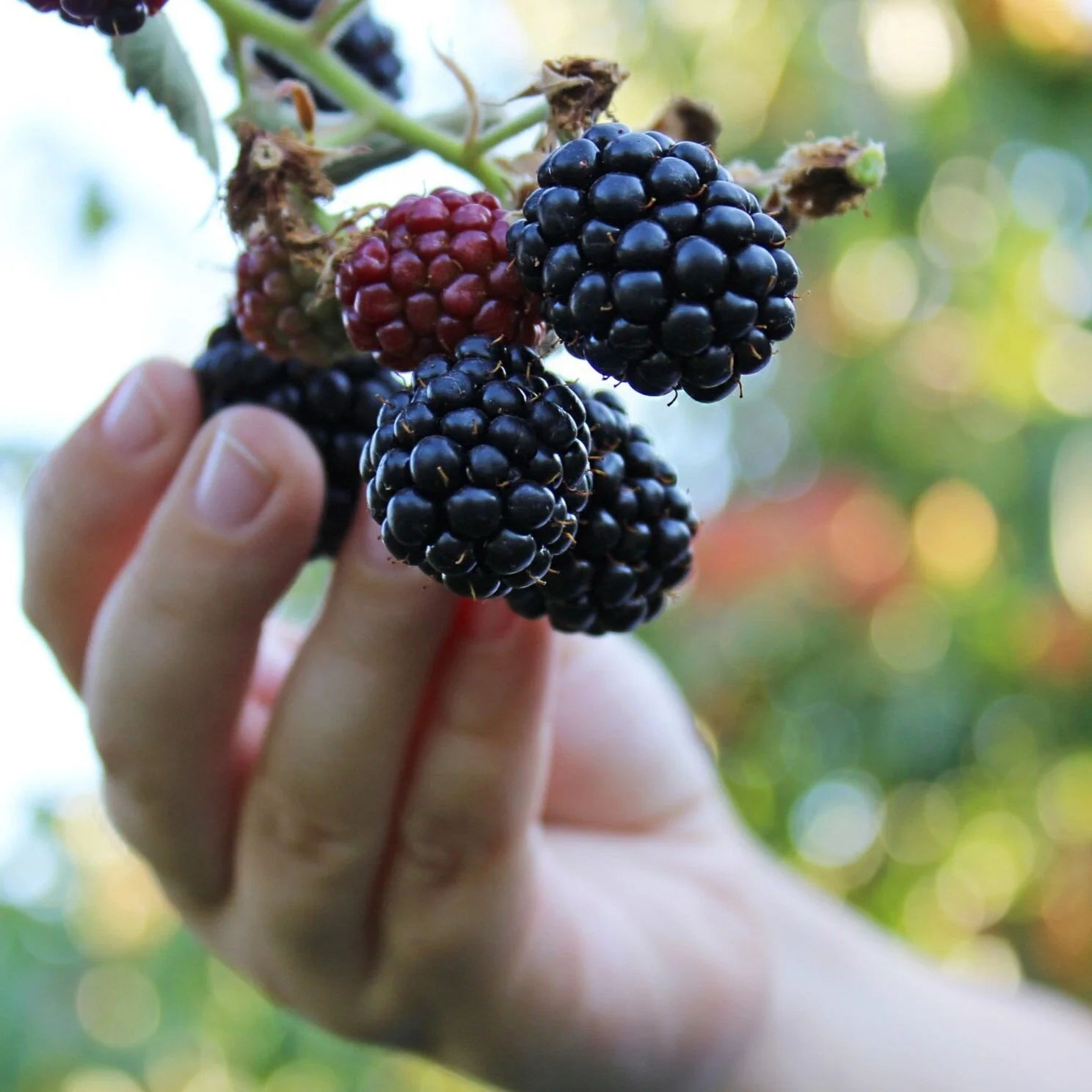
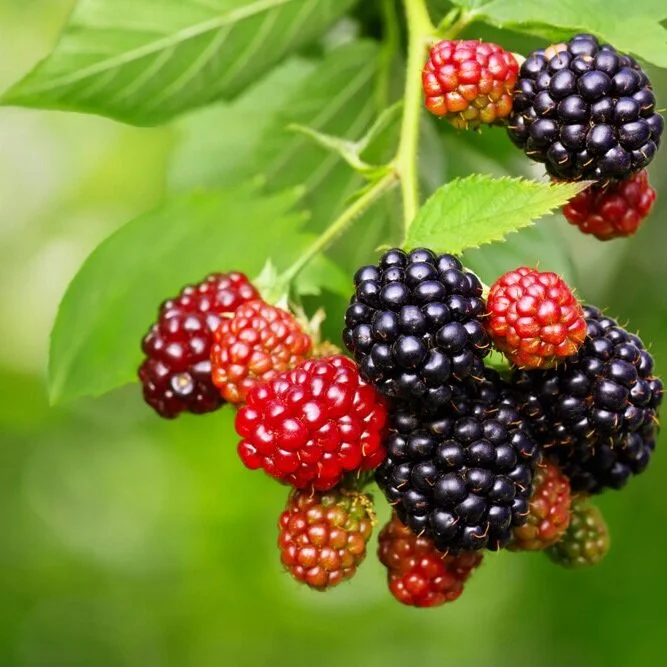
The fruit starts to ripen from mid-summer onwards and are best picked as soon as they are ripe. Ripening can be tricky with blackberries as they change colour early but can still be tight berries or individual droplets (smaller portions of the whole berry) can be different colours. The fruit is ready for picking when it has turned black and the drooplets swell up. Timings will be different depending on the blackberry variety as well as the weather and growing conditions.
Unlike raspberries, blackberries pull away with the fruit core intact and will sometimes come away with the calyx still attached.
Top Tip
A general rule of thumb is if the fruit is difficult to pick off the plant then it is not quite ripe enough to pick. Leaving the drooplets to swell will give you much sweeter berries.
Pruning Blackberries
Blackberries are vigorous plants and need regular pruning and training. The shoots of newly-planted briars need to be tied in on a regular basis. Once these reach their first winter, cut back all side-shoots produced on the main briars to 5cm (2in). Flowers are then formed from the resulting fruiting spurs.
Also once harvested, older stems can be cut back and the fruited stems down to ground level. Be careful not to cut out the new/current year's stems as these will produce the bulk of next year's fruit.
Blackberries propagation
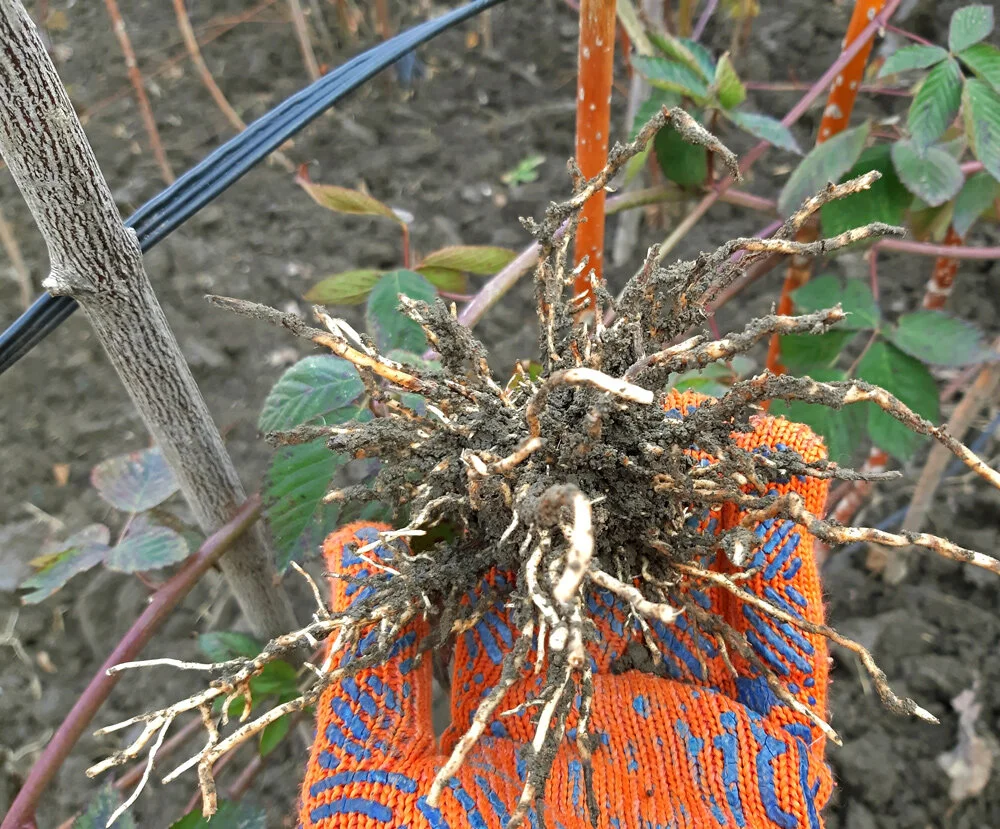
Blackberries are great at tip layering, so if new plants are required or you need a denser fruit patch allow 2-3 growing tips to touch the floor and peg down. These will quickly produce roots and once well rooted can be lifted, cut away from the mother plant and transplanted elsewhere. Alternatively place the growing tip onto a pot of compost and they will happily root into the pots. Once rooted cut away from the mother plant and grow in the pot to produce new plants for later planting.
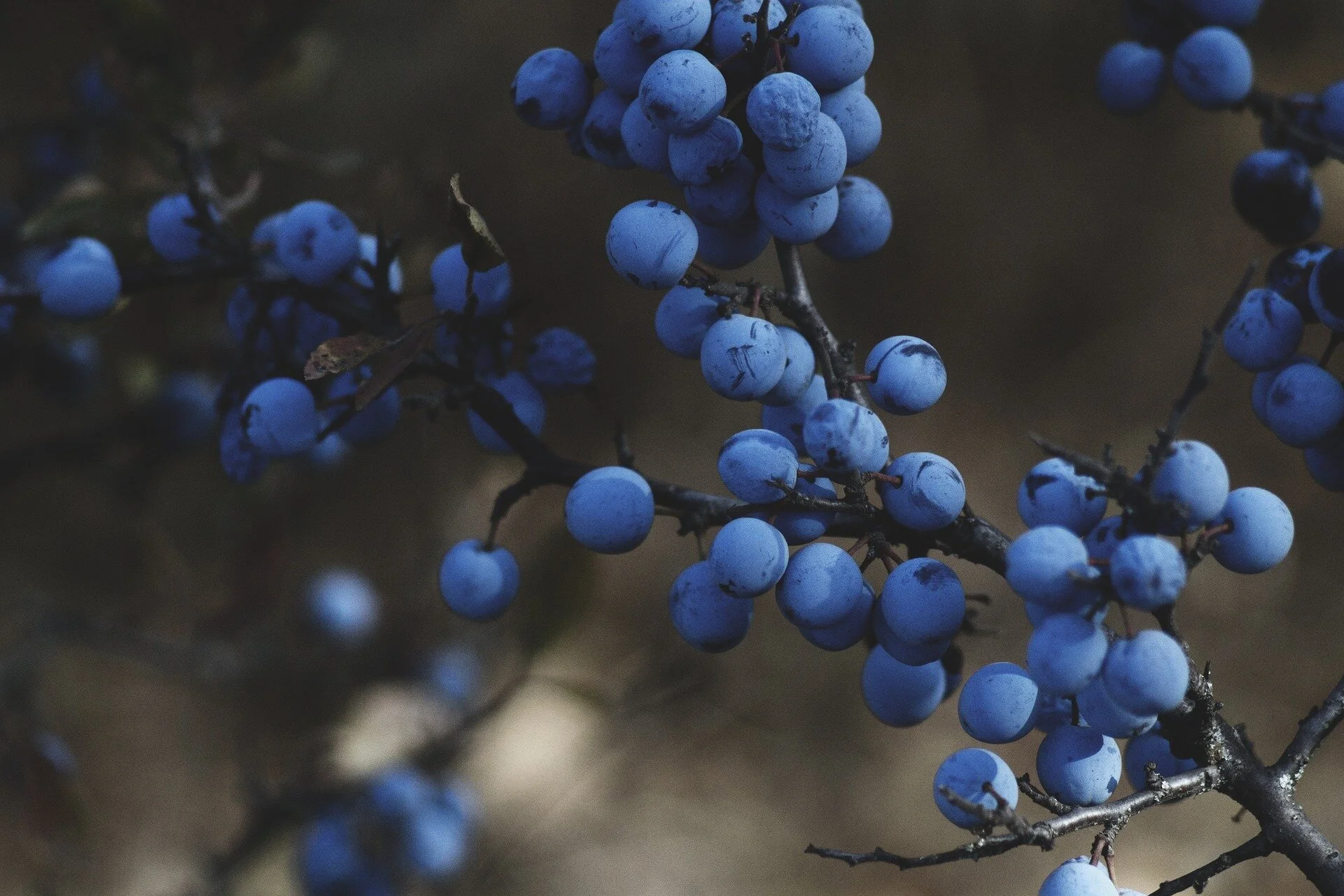
Blueberries
Blueberries are becoming more popular in gardens big and small. The reason being is that blueberries are highly productive fruiting bushes and their glorious autumn colours provide ornamental appeal. The fruit is delicious and is high in antioxidants and essential vitamins. Blueberry bushes can be planted in the garden border amongst other shrubs, in rows in beds or as attractive container subjects. Blueberry bushes can be evergreen or deciduous and can be small or large varieties but usually grow to a maximum of 1.5m high. They can be grown in pots or directly in the ground.
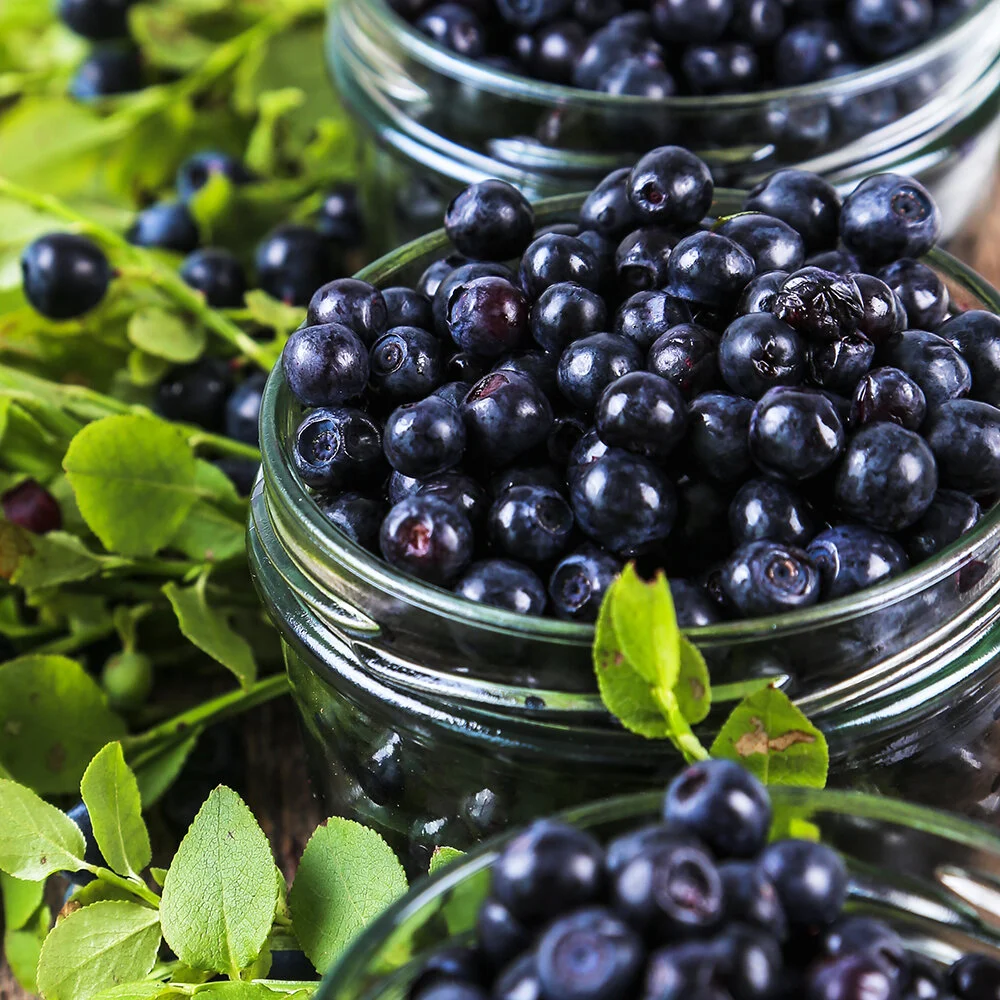
Blueberries varieties
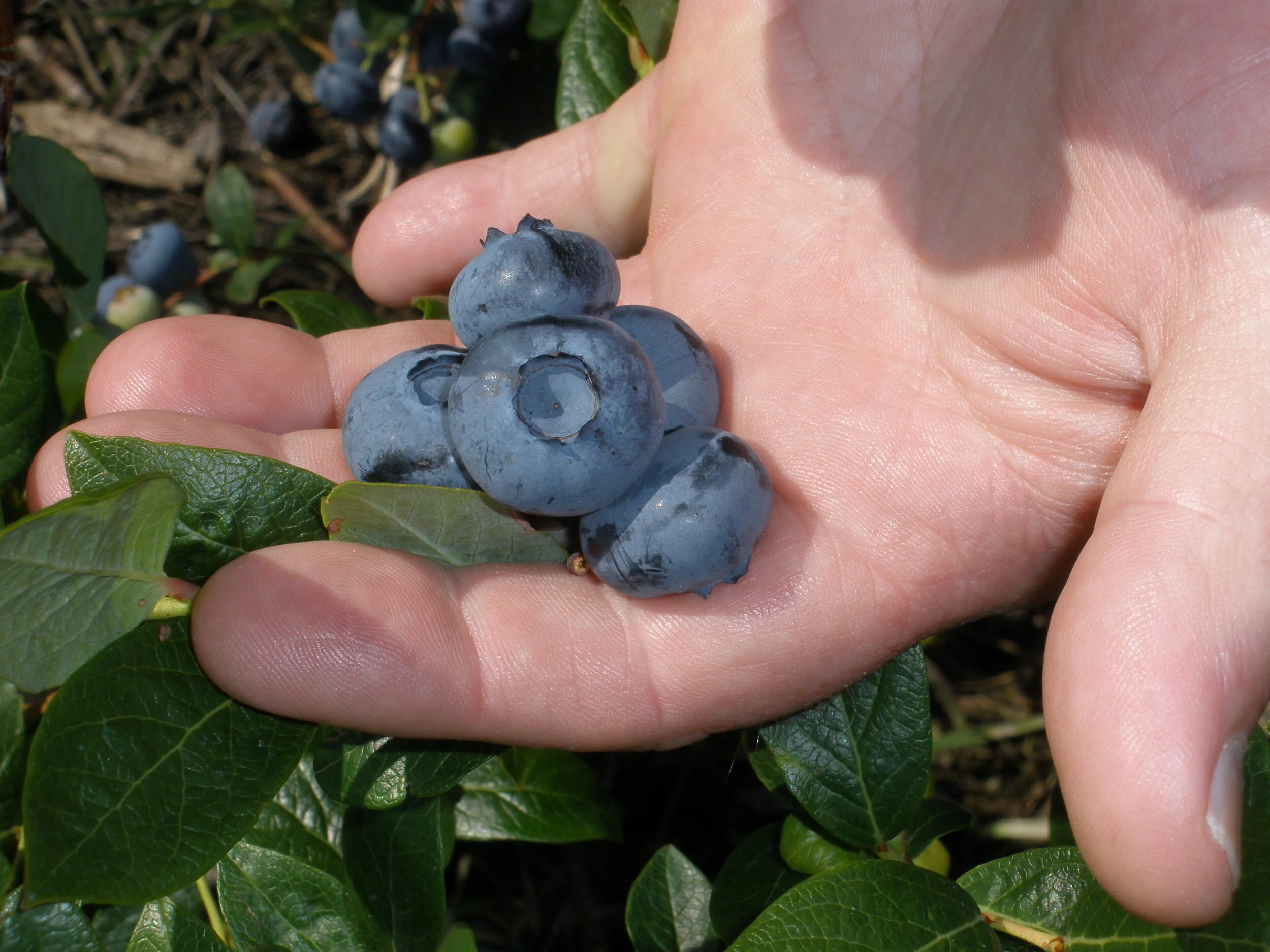
Many commercial varieties of blueberry are like other commercial fruit grown under licence and are not available to home growers, however, according to the RHS the following varieties are regarded as notable.
‘Tophat’: A self-fertile, heavy-cropping dwarf blueberry. Mature plants attain a height and spread of only 60cm (2ft). The medium-sized berries have a very good flavour. It has an attractive autumn colour.
‘Duke’ AGM: A once highly prized commercial variety, Duke produces stocky bushes and gives good yields of medium to large fruit of excellent flavour. ‘Duke’ flowers late but crops early, so is especially good for northern areas where the growing season is short. It is also partly self-fertile.
‘Spartan’ AGM: Very hardy, early- to mid-season ‘Spartan’ bears large fruits with a sweet, tangy flavour. To crop well, this cultivar needs another blueberry cultivar nearby.
‘Nelson’: A mid- to late-season cultivar that is very hardy and self-fertile. The large fruits and good flavour make it useful for the home fruit garden.
Best soil for Blueberries
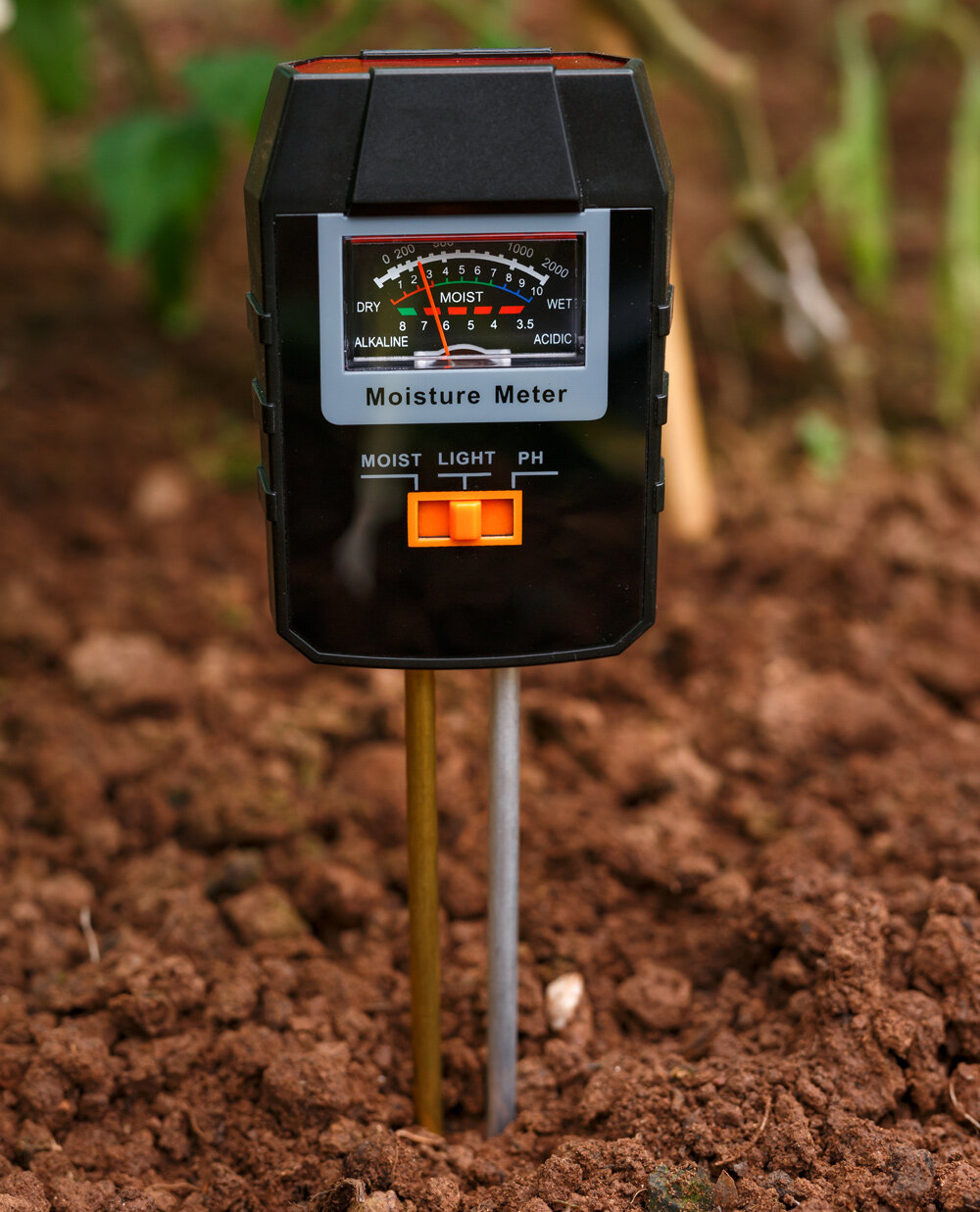
Blueberries require light, free-draining acidic soils, with plenty of rich organic matter if they're to flourish. If grown in pots, try and find a peat-based substrate as this is naturally lower in pH, alternatively use ericaceous compost. Blueberries are relatively easy to care for as long as root pH is maintained. It is important to keep the compost or soil of blueberries moist, but not soaking wet and feed regularly but not too much.
The soil should have a lower pH of between 4 and 5.5 so as to avoid any issues. If soil is higher than this, it is possible to lower the pH by adding sulphur chips well in advance of planting. It is a good idea to monitor the soil's pH every few years, because it may be necessary to add acid. If the soil is naturally chalky then place into a raised bed or in containers to avoid unnecessary pH climb.
Blueberries planting
Blueberry bushes may be planted at any time of year as long as the ground isn’t frozen. They are a cold climate fruit so do very well in northern Europe. Planting can be almost anywhere in the garden apart from in full shade. Blueberries thrive in sunny, sheltered spots or even light shade. Although blueberries are tolerant of shade, the sun encourages better fruit and a deeper colour. When planting think about the end size of the variety you are growing and give it enough room to grow. Dig a large hole spreading the roots as you refill the hole to the base of the stem and then compact the soil down.
It is better to plant two different varieties of blueberries to ensure cross-pollination. While a single blueberry plant will produce fruit, yields will be higher and the fruits bigger if more than one plant is grown.
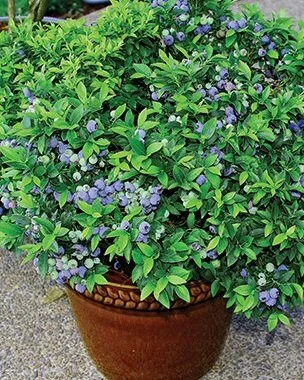
Growing Blueberries in containers
When growing in a container ideally it should be at least 30cm (12in) in diameter for young plants, and then move into a 45-50cm (18-20in) container when it outgrows the first one. Ensure you use a peat based or ericaceous compost to maintain lower root pH.
Top Tip
Commercial growers will keep blueberries in smaller pots than they really need as it stimulates a little stress which results in a plant which will produce more fruit
Feeding Blueberries
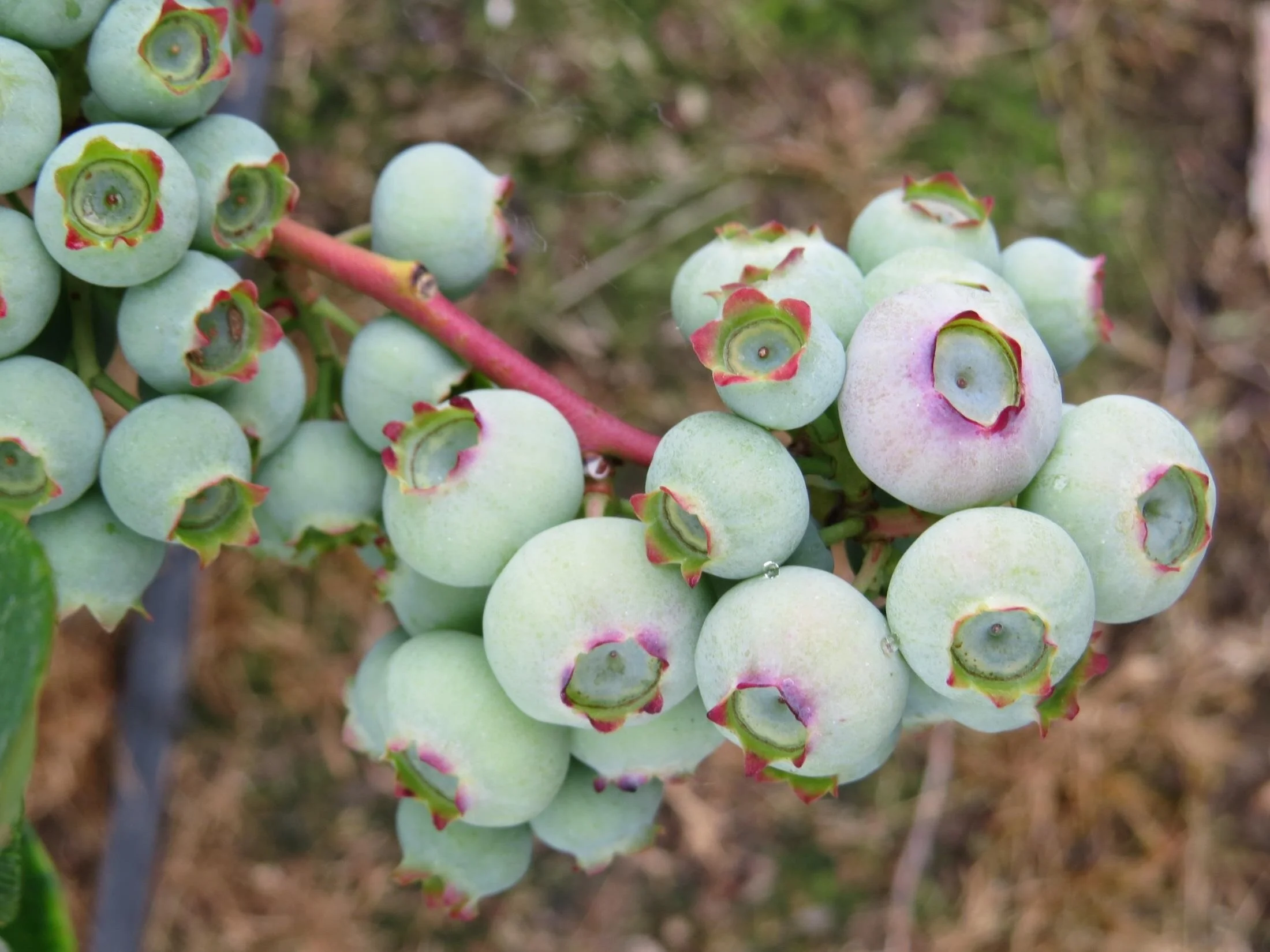
Blueberries are relatively easy to feed. Remember to keep the compost or soil moist and don’t allow them to dry out between watering’s. Always water blueberries with rainwater, not tap water, unless you have no alternative, say in a drought. If you have no access to rainwater then look into downspout collectors and drums to capture water. Tap water is generally hard and will raise the pH level and blueberries like acidic conditions; tap water will quickly cause deficiencies to appear and may even cause leaf drop if left unchecked. Feed container plants every 2-4 weeks with Gro-Expert berry feed. A higher potassium ratio feed gives the plant a nice balance of leaf to flower and won’t provide too much nitrate nitrogen which blueberries dislike. Calcium is essential for blackberries to produce lots of strong fruit which will have plenty of shelf life, once harvested. Gro-Expert advise feeding every two weeks during the flowering and fruiting period season and this can be reduced to four weeks early and late in the season.
Growing Tips
Mulch each spring. Mulch is best applied in the form of chipped up pine tree bark or pine needles as they are naturally acidic and will help keep the pH down to below 5.5.
Avoid farmyard manure as this is too rich for the blueberries and will scorch their fine, fibrous roots and will cause leaf drop.
Always use rainwater whenever possible as tap water contains lime which reduces the acidity in the soil and compost over time.
Cover the berries with netting to prevent birds and squirrels from eating the fruit. Birds, especially pigeons, love blueberries and can devastate a crop in short order if left un-netted. Scarecrows and bird-scaring mechanisms work for a while, but the most reliable method of protection is to cover plants with horticultural mesh.
How to harvest Blueberries
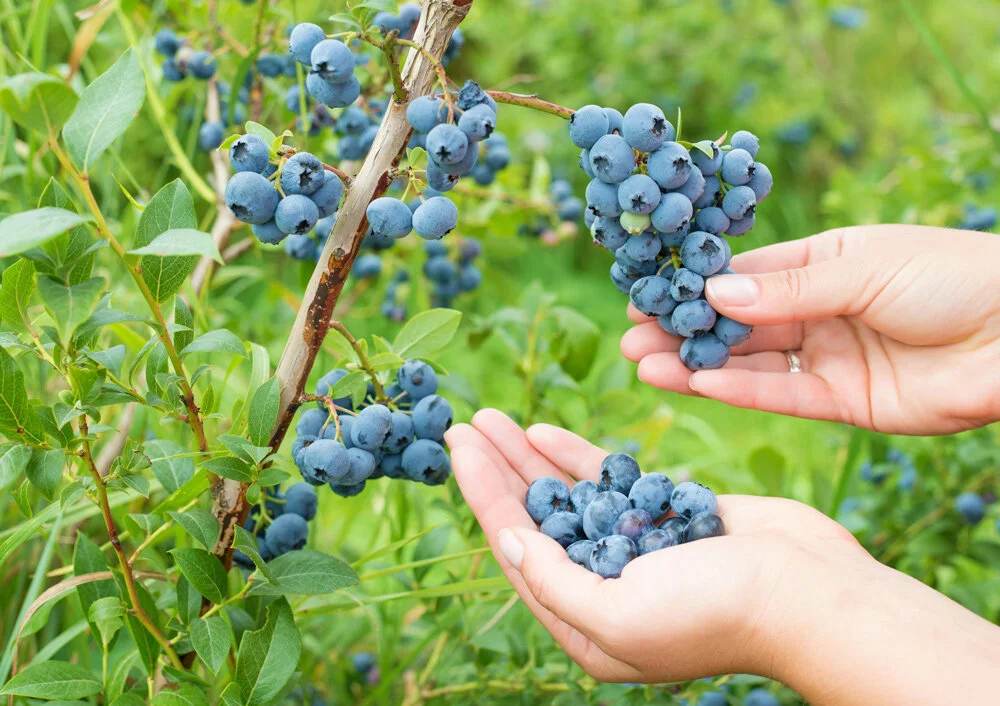
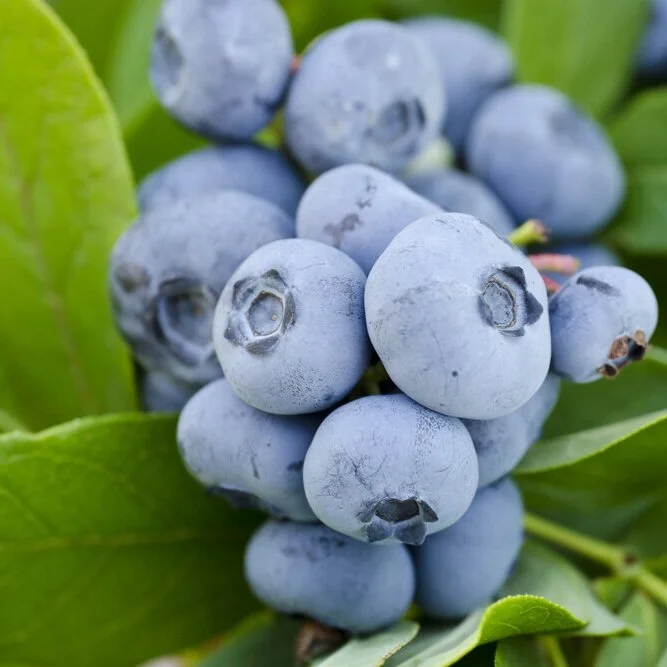
Blueberry fruits, grow in clusters which ripen at different times. Regularly check the plants during the ripening period. Ripe fruits are easy to pick. They are ready to pick once they have turned a deep blue and look larger than their greener companions. Unlike other berries they can be left for a few more days after they turn blue for a more intense and complex flavour. To pick just roll the berry in your fingers to avoid bruising and pull away from the fruit cluster taking care not to dislodge other berries.
Once picked blueberries can be eaten fresh; alternatively, they can be dried, frozen, made into preserves, or used in cooking. They are extremely rich in antioxidants and vitamins (especially vitamin C) so have many health benefits.
Pruning Blueberries
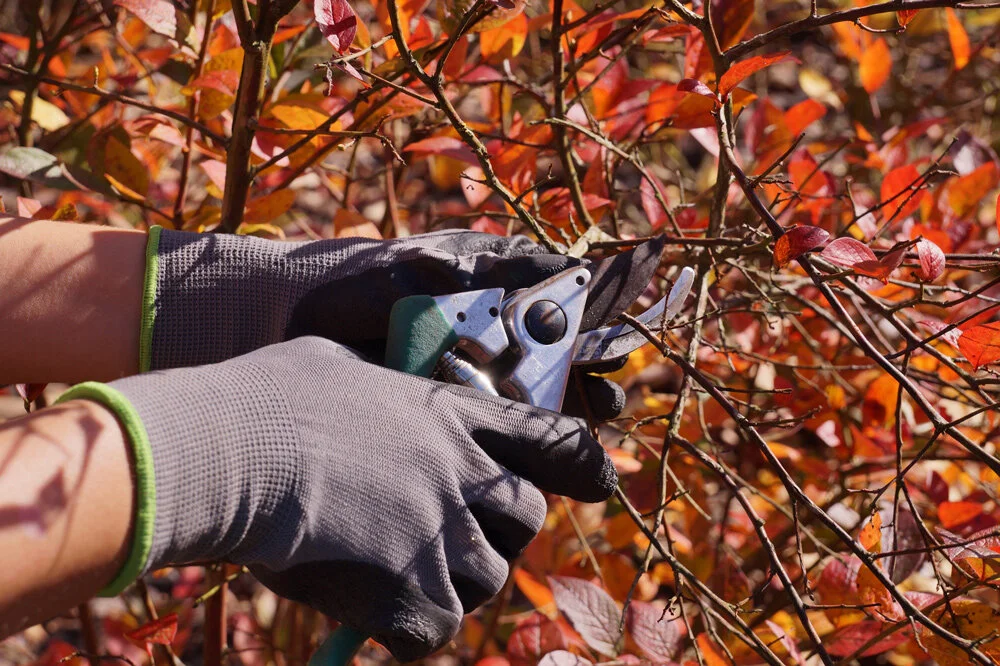
Blueberries will still produce fruit on the plant’s second year. Pruning is not really necessary during the first two or three years, however it is good housekeeping to keep the plant tidy. After this, blueberries need regular pruning to maintain plant vigour and the quality of the fruit. The ideal time to prune them is between November and March when the plant is dormant.
Pruning should remove the following:
Any dead, dying and diseased wood.
A couple of the oldest branches at the base each year.
Old limbs that don't produce much fruit to make way for younger, more productive ones.
Weaker twiggy wood on the ends of fruiting laterals.