
FAQ’s
Fertiliser and your garden
+ If there are already nutrients in my soil, why add more?
When you are using feed, you are replacing what is or has been absorbed by plants. Each growing season, plants chomp through all the potassium, nitrogen, phosphorus and sulphur they need from the soil or compost. At harvest time, these nutrients are removed by you taking all the fruits, flowers, vegetables and even lawn clipping away from the mother plant, leaving a shortage for next season. By adding feed you are completing the ongoing cycle. This recycling of nutrients ensures that plants or subsequent crops get what they need to grow.
+ With Gro-Expert, am I going to use more feed, since my yields will be increasing?
In short, No. At Gro-Expert we have taken a lot of time to ensure you use your Gro-Expert nutrients more efficiently and effectively. Plus, we are adding nutrients that are essential for more yield and products like Aqualatus which maximise nutrient balance and nutrient and water retention enabling your growing media to hold more nutrients around the roots for your plants to use.
+ What happens to all the Gro-Expert feed I am applying as plants grow and when my produce is harvested?
We always recommend to apply Gro-Expert nutrients at the levels required for crop growth so almost all will be used by the growing plants. When you harvest your fruits and veggies, you also remove the nutrients that plants have absorbed from the soil to grow them. Some may be left in the soil however this will be used post-harvest by any plants that will be overwintered or kept safe in the soil for use early next year.
+ The way I am feeding my plants now is working fine. Why should I change to Gro-Expert?
With Gro-Expert nutritional packages not only do you get packages of nutrients, tailor made for your plants, you also get access to expert advice on feeding your fruits, vegetables and plants from our industry experts.
+ Will I have to buy more Gro-Expert feed?
Adopting the Gro-Expert approach may lead you to buy more feed, possibly reduce your feed use, change the sources you use and/or apply those sources at different rates or at different times and places than you are used to. The main objective is to make more effective use of nutrients in a way that balances the nutritional benefits with an expert approach to give you the best crop possible.
+ Can I save money by reducing the amount of feed?
Adopting the Gro-Expert approach is not about reducing feed use. It’s about ensuring sustainable nutrition practices that help you meet quality and yield goals. Meeting those goals may result in feeding rates being lowered or raised depending on factors specific to each customer. In the end, feed rates will only be reduced where is makes sense to do so.
Nutrients – for home growers
+ What type of Gro-Expert feed should I buy?
Choose a feed based on your plant type and stage of growth. If your plant is listed on the product label, simply follow the guidance provided. For other plants such as peppers, cucumbers, or courgettes, check the Gro-Expert website or contact us for advice. We are continually expanding our range, so check back regularly for new products.
+ Can I store unused Gro-Expert feed for use next year?
Yes, unused Gro-Expert feed can be stored for future use. Keep bottles tightly sealed in their original containers and store them in a cool, dry place away from frost. Prevent moisture from entering the container, as this may affect the product quality.
+ What are the three numbers on the plant food bottle and what do they mean?
The three numbers on plant or lawn feed (e.g. 5:5:10 N:P:K) represent the proportion of the three key nutrients: nitrogen (N), phosphorus (P), and potassium (K), listed in that order. For example, a 5:5:10 feed contains 5% nitrogen, 5% phosphorus, and 10% potassium.
+ Why is Potassium noted as K when it begins with P?
Potassium is represented by the letter K because its chemical symbol comes from the Latin word Kalium. The letter P is already used for phosphorus.
+ What’s the difference between conventional feeds and organic feeds?
Conventional fertilisers are synthetically manufactured to provide nutrients quickly, while organic fertilisers come from plant or animal materials and release nutrients more slowly.
Correct rate of application
+ Do I have to measure our Gro-Expert feed using a special device? Can’t I just use my common sense?
All Gro-Expert nutrient products come with their own measure to make it as easy as possible to accurately use the right rate. Also all recommendations are based upon 10 litres of water so if you only have a couple of plants or hundreds you can measure the nutrient out accordingly.
+ How much feed do I need?
The recommended rates of application to you plants are provided on the sleeve of the box so do not throw it away. They are also on the bottles of the individual products as a reminder. If you do however throw away your sleeve we have placed photos of the sleeve on the Gro-Expert website which you can print off. If the plant you wish to feed is not on our list of plants then please contact one of our experts.
+ I just applied the Gro-Expert lawn feed. Do I need to water the lawn right away as with other feeds?
No you don’t. The Gro-expert recommendations are accurate to provide feed for 1 month so they do not need to be watered in. However it is important to note that lawn feeds should not be applied in the heat of a hot sunny day as the spray may dry too fast and concentrate the nutrients too much. This could result in your grass leaf blades being slightly scorched. Try to apply later in the day or on a dull day.
+ I just forgot to add all the Gro-Expert products together and only added the feed. Will this be a problem?
No not at all. All you need to do is add the ones you missed next watering and this will lift the nutrients and you will catch up. Plus there should always be a small store of nutrients from previous watering’s so the plants will be fine.
Timing of applications
+ When should I apply Gro-Expert nutrients?
This will depend on your specific situation, however as a rule of thumb plants or crops in the soil should be fed once they start to grow ideally from early April if outside or earlier under protection. In growbags or containers the compost always comes with nutrients already added and these will last about 2 weeks so you can feed after this point. Always follow our recommendations on frequency of feeding as plants are different and need different levels of nutrition.
+ Why is it necessary to feed my lawn in the autumn?
With lawns the summer can be a difficult time due to less moisture from rain, increased traffic from children playing or general use and constant mowing removes much of the nutrition added. Autumn is a period of recovery for lawns and nutrition is vital during this period to ensure the lawns have plenty of nutrients so leaf blade number is maintained, preventing moss ingress and also to provide a store of nutrient through the winter when no nutrient applications will be made.
+ Is it okay to apply feed to lawns during the hot summer months?
Yes definitely, frequent mowing removes lots of nutrients and also when a leaf blade is cut is never grows back and can if not cared for becomes an infection point for disease. Strong healthy grasses will stave of disease and will ‘tiller’ under regular mowing. This mean the grass plants throw more leaf blades up from the roots and spread out sideways to give you a thicker lawn. Well-fed lawns will also have stronger deeper roots so fair better under the heat of the summer when there is less rain.
+ I am planning to de-moss my lawn. Should I apply Gro-Expert nutrients before or after?
With the Gro-Expert recommendation for lawns of a single application per month is doesn’t really matter. We would not recommend feeding lawns just before or just after de-mossing, however within 3 days either side will be fine.
+ I am planning to reseed my lawn. When should I apply feed?
After reseeding any lawn, we would recommend application of Gro-Expert Lawn nutrients 10-14 days after re-seeding.
+ I just laid turf. Should I feed it with Gro-Expert Lawn plant food?
Yes! We would recommend you feed your newly laid turf the day after watering it. This will help to push the roots out into the soil below to aid ‘knitting the turf’. It is most important however, to regularly water newly laid turf so it does not dry out at the edges. This will ensure no shrinkage of the turf and most importantly- no gaps!
+ Can I use the same feed in Gro-Expert for my garden?
Most definitely! You can actually use the Gro-Expert nutrient packs to feed everything in your garden and we would encourage it as well fed garden plants are healthy plants. For all flowering garden plants you could use the tomato feed if you haven’t got the flower pack and also for large tree and shrubs, using the lawn feed pack will give you luscious looking leaves.
+ Are Gro-Expert nutrient safe for my pets and children?
In concentrated form the Gro-Expert nutrients should be kept away from pets and children as they are concentrated salts and as such would not be safe if they were ingested or splashed in eyes. They are however, very safe once diluted and applied to plants. We would recommend keeping animals off lawns where the nutrient pack has just been applied as dogs may lick the lawn which would not be good for their tummies.
+ What do I do if my pets or children get splashed with Gro-Expert nutrients?
On skin short term exposure is not harmful. Just wash off the nutrients with soapy water and dry with a towel. Some people and animals may be sensitive to concentrated salts and so their skin may show a reaction. In this case it may be necessary to seek medical help. If splashed into eyes then again wash eyes with clean water to dilute the salts and keep washing until any irritation stops.
+ What do I do if my child or pet drinks Gro-Expert nutrients?
If any Gro Expert nutrient are inadvertently ingest by a child or pet, have them drink plenty of water to dilute the salts. Do not induce vomiting as this is not necessary. Make sure any product is rinsed from the mouth and continue to ensure water is drunk for a period of time. If a child or pets is unwell after ingesting Gro-Expert nutrients please seek medical advice.
+ I have a pond in my garden so is it safe to use Gro-Expert nutrient packs near it?
Yes Gro Expert nutrients are safe to use around ponds. Please ensure you don’t add large amounts of any plant nutrients to a pond as this will not be healthy for any animals that may live in the pond and may also stimulate growth of weeds and algae which my reduce oxygen levels in the pond.
+ I have put too much Gro-Expert nutrients in my watering can, is it safe to use on my plants?
We would never advise you to over apply nutrients to plants as it may be wasted or can affect nutrient uptake and even damage roots. if possible, tip have the mixture into another watering can or a bucket and fill both up to 10 litres again. If its slightly less concentrated than required that will not be an issue for the plants.
+ Please could you tell me if Gro-Expert nutrient packs are suitable to feed potatoes growing in bags?
Yes. The tomato pack, used once a week with normal application rates, would be fine for potatoes. They actually are from the same family, solanum. The analysis of the tomato pack plus the extra support from other nutrients is ideal for potatoes as they love higher potassium levels and need lots of calcium to produce strong tubers
+ I would like to use Gro-Expert nutrient packs, however I have set up an inline feed system and need to make a nutrient solution to be added to the water. Can I use Gro-Expert nutrients in this system?
Yes you can. The Gro-Expert nutrients sit well together as a stock solution mix especially as our Gro-Expert Calcium is chelated. For more details make direct contact via the website and we will provide you with a complete recipe for your plants.
+ Can Gro-Expert nutrient be used for indoor plants as well?
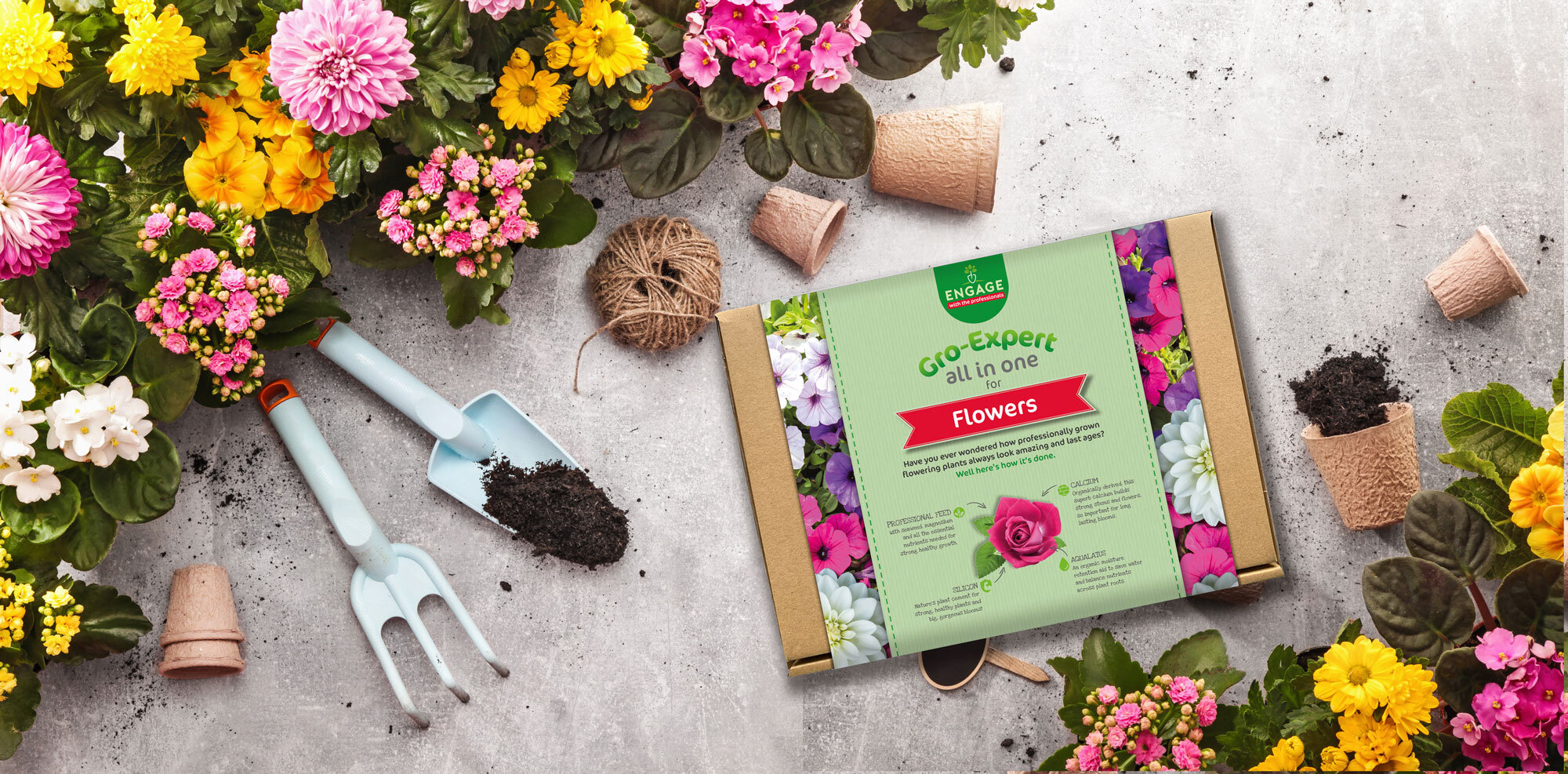
Yes they can. In fact, we encourage it as many people just use water to keep indoor plants going and wonder why their plants never look good. Using the Gro-Expert flower pack nutrient every couple of weeks on your indoor plants will keep them looking great.
+ Can I use Gro-Expert lawn food on my plants as I bought the one for lawns instead of for plants by mistake?
Sadly not. It would not do plants any harm, however the nutrient ratio is much more weighted towards nitrogen which would produce lovely leafy plants but not much in the way of quality fruits or flowers. Best to use it in your garden on trees and shrubs or lawn if you have one, or contact us directly for a replacement.
+ Can I use Gro-Expert plant food on my lawn as I bought the one for berries instead of for lawns by mistake?
Yes you could, however it is not ideal. The analysis of the berries feed is more potassium based and so won’t promote growth at the same level as the lawn feed. Plus the berries pack contains calcium which grasses don’t require very much of, so it may we wasted. Best to contact us directly for a replacement pack.
+ I have various plants in my house and garden. All suffer from chlorosis. My water ph is 8.5 & very hard. Will Gro-Expert nutrient be helpful to me?
They will, however the pH will still be a concern and will prevent certain nutrients being available for plants to use. Sadly high pH plays havoc with the uptake of iron and manganese by plant roots and both of these nutrients are essential for chlorophyll production which give leaves their green colour hence why you are seeing yellow chlorosis. Please contact us directly and we can help you source a pH down material you can add to the nutrients to solve your issue.
+ Can I use Gro-Expert feed over the leaves of my plants or just apply to the surrounding soil?
Gro-Expert nutrient packs are designed ideally for root application, however with many plants such as strawberries, grasses, and some flowering plants it’s impossible not to get some of the nutrient over the leaves especially when using a rose on a watering can. This is actually fine and needn’t be a worry. Plants are adapted to take a small portion of nutrient through their leaves and will use any nutrient laid on the leaf surface.
+ I have bought a Gro-Expert nutrient pack and want to take it to feed my holiday home and wondered if I can carry it in my luggage on a plane?
Inside a case and if the pack is protected from damage the Gro-Expert nutrients would be safe to carry. We do however recommend you contact your airline as they many have specific rules on this kind of thing.
+ I have removed all the packaging from the Gro-Expert nutrient pack and now cannot remember what to do. Can you help me?
Not a problem. Go to the Gro-Expert website and look for the product that corresponds to your pack and print off a copy of the instructions. If you cannot remember the pack you purchased please contact us directly and we will be able to help you.
+ Can I use the Gro-Expert nutrient packs for hydroponics?
Yes indeed. The Gro-Expert nutrients are used by many professional hydroponic growers in our commercial grower versions. If you need any help on application please contact us directly.
+ Do you ship Gro-Expert nutrients outside of the UK and Republic of Ireland?
Yes we can do, however it is best to contact us directly regarding this as the carriage charges will be slightly different.
+ Are Gro-Expert nutrients suitable for use by Vegans?
Yes they are. The main feeds are all mineral nutrients and the Iron and Calcium and Aqualatus are all derived from plants.
+ I would like to buy many packs of the Gro-Expert nutrients, can I do this?
Yes you can, as we always carry plenty of stock. Also you could contact us directly depending upon the number you wish to buy.
+ Are any of the Gro-Expert feeds suitable for bulbs? How soon after planting should they be used?
Yes, you can use Gro-Expert flowers for bulbs, however timing of feeding is important. When you buy a bulb, it already has the entire nutrient stored inside to produce a flower. The important thing is to feed it once flowering has finished. At this point the bulb is initiating flowers for next season and the leaves and roots are mobilising nutrient into the bulb for storage. Also don’t cut off the leaves when green as this removes valuable nutrients the bulb will be pulling in for storage.
+ Do Gro-Expert plant nutrients have a shelf life or use by date?
Gro-Expert nutrient packages do not have a use by date as they will last in their containers for up to two years. If keeping for longer periods keep the packs in a cool dry place but free from frost. Keep the containers tightly closed and do not store on a hot window ledge as this can lead to the products experiencing extremes of temperatures.
+ What do I do with the empty containers?
All Gro-Expert packaging is completely recyclable. Just rinse the bottles out in order to remove any nutrient left and place in your recycling bin.
+ Is using Gro-Expert flowers better than using slow release granules in my hanging baskets?
In our opinion yes it is! For the simple reason you are in control. The term controlled or slow release means the product is metered out either via granule breakdown or via the temperature in the compost, however you cannot control how much nutrient is available. Also as the hanging basket fills with roots, the plants nutrient demand increases and slow or controlled release nutrients will, by that time, be depleted. Liquid feeding gives you a regular accurate amount of feed to keep the plants happy and produce fabulous blooms. Plus if you need to water more due to increased demand, you can add more feed.
+ Can I use the Gro-Expert lawn feed through a hose end applicator?
Yes you can. Work out the volume of the area to be sprayed and how the hose end applicator is metered. Then add the required amount of nutrient to the chamber and fill with water. If you need help with this or are unsure, always contact us directly and we will be happy to give you recommendations. Do NOT fill the chamber with concentrated nutrients as this may scorch your lawn.
+ Once I have mixed the nutrients how quickly do I need to use them?
The nutrients once mixed in a watering can will be fine for at least a week.
Fertiliser basics
+ What is fertiliser?
Simply put, fertiliser combines the nutrients that plants need to grow – potassium, nitrogen, phosphorus, and sulphur– in a form they can easily digest. It is a balanced diet of plant food! As plants grow, they absorb, or mine, nutrients from the soil. When commercial crops are harvested, so too are the nutrients they have absorbed.
+ Are there chemicals in fertiliser?
The word ‘chemical’ is a common misconception with fertilisers. The four main ingredients in fertiliser: nitrogen, potassium, phosphorus and sulphur actually come from nature. They are not man-made, however they are formed in crystals so fertiliser manufacturers just convert them into forms that plants can use.
+ Do farmers need to use fertiliser?
Farmers use fertiliser to replenish the nutrients drawn from the soil, which plants need to grow. When a crop goes to market, so too does the potassium, phosphorus, and nitrogen and the other essential nutrients it has absorbed from the soil. When farmers add nutrition to soils, they are putting back into the soil the nutrients their next crop will require. While the same nutrients in fertiliser are naturally found in soil, they are not present in a sufficient supply or balance for today’s demand by consumers. It can take years for soil to naturally rebuild the necessary nutrients essential to nurture a good crop.
+ Where does phosphorus come from?
Phosphorus used in fertilisers comes from the fossilized remains of marine life found in rock deposits. This raw ore is processed to create water-soluble compounds that make the phosphorus available to plants as a nutrient. Phosphorus helps early plant health and root growth and is involved in seed germination and to ensure plants use water efficiently.
+ Where does potassium come from?
Potassium is the seventh most abundant element in the earth’s crust. Through natural processes, it is filtered into the planet’s seas and oceans. As these bodies of water evaporate over time, they leave behind mineral deposits. Potassium is taken from these deposits.
+ Where does nitrogen come from?
The air all around us contains nitrogen. In fact, nitrogen makes up about 78 percent of the atmosphere. Fertiliser producers combine nitrogen from the atmosphere with natural gas to change it into a form that plants can use.
+ What are the ‘essential’ mineral nutrients for plants?
Nutrient fall into four categories: Macronutrients: nitrogen, phosphorus, potassium, calcium, magnesium and sulphur. Micronutrients: silicon, boron, copper, iron, manganese, molybdenum and zinc. Beneficial nutrients for some plant species, not all: sodium and cobalt. Essential nutrients for animals but not for plants: selenium (cows for milk production).
Fertilisers and food
+ What role do fertilisers play in feeding people
Fertilisers play an essential role in helping feed the world. Thanks to modern fertilisers, world food production has more than doubled since 1960. Today, almost 50% of our global food supply is directly linked to the use of commercial fertilisers. If we are to meet future food demands, especially as more people move towards a vegetable based diet, we will need to double our current levels of production. We can’t do that without fertilisers. Continuing to make better and more efficient use of fertilisers will help us feed the growing population.
+ Are Organic foods better because they are grown without fertiliser?
Again this is a common misconception with organic growing. Organic growers use fertiliser too. It is just made from different ingredients such as animal manure, sewage sludge, plant waste, fish meal, or harvested plants like seaweeds. Sadly, these natural fertilisers are not available in sufficient quantities to meet the demands of today’s intensive farming, nor do they provide nutrients in the combinations contained in commercial fertilisers.
Fertiliser and the environment
+ Is fertiliser harmful to the environment?
Commercial fertilisers are an essential tool in today’s high-yield farming; however they do require careful application and use to protect our environment. Fortunately, advances in agricultural techniques are enabling farmers to apply soil nutrients with pinpoint accuracy thereby minimising or avoiding any damage to soils, water, and the air. Engage advise on many of these areas helping farmers and growers to optimise plant nutrition and reduce unnecessary applications of fertiliser which may go to waste.
+ Wouldn’t it be better for the environment to use less fertiliser?
By adopting nutrient stewardship practices, promoted by advanced nutrition companies such as Engage, farmers contribute to the preservation of natural ecosystems by growing more on less land. As a result of advances in agricultural practices, farmers can now use fertiliser more efficiently. It is however, very important to maintain nutrient levels in the soil, for the overall health and longevity of a crop. An insufficient supply also reduces plants ability to withstand harsh weather, disease, and other environmental stresses. Plants require adequate nutrients to maintain strong roots and help reduce the risk of soil erosion from wind or water.